
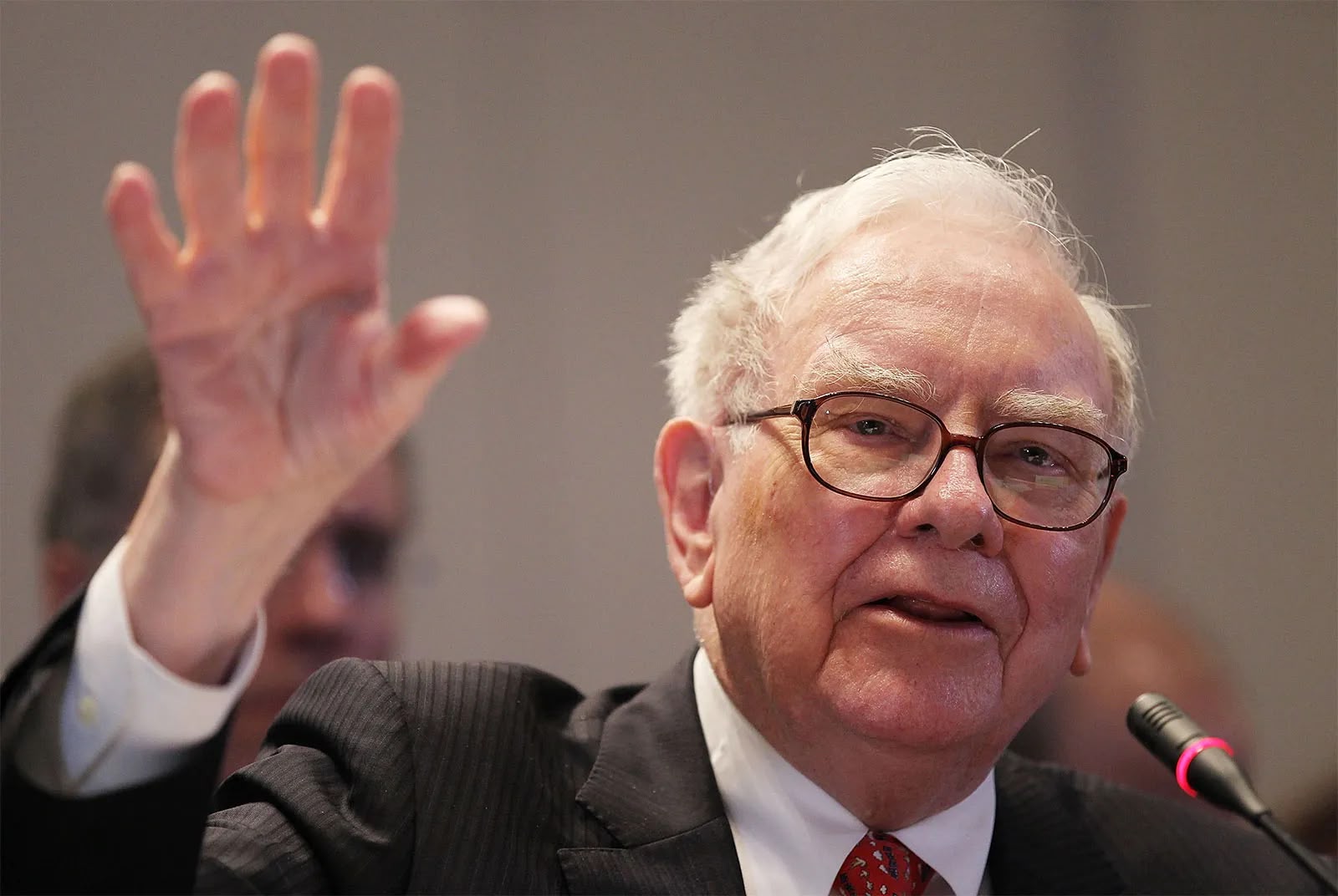


Warren Buffett is stepping down as chairman of Berkshire Hathaway, the trillion-dollar conglomerate he has steered since 1965, with his son Howard Buffett taking the role with immediate effect. The 96-year-old made the announcement on Friday in a letter to shareholders, closing one of the most consequential leadership tenures in corporate history.
Under the succession plan, Buffett moves to chairman emeritus while remaining a director on the board. Howard Buffett, a Berkshire director since 1993, steps into the chairmanship and Susan Decker continues as lead independent director. The move follows Greg Abel’s assumption of the chief executive role in mid-2025, a transition Buffett first signalled to a visibly surprised crowd at the company’s annual meeting in May of that year.
Buffett had remained an active presence even after handing the CEO position to Abel, continuing to come into the Omaha office daily and consulting regularly with his successor. He attended Berkshire’s annual meeting in May and in July, revealed that he had personally driven the company’s roughly ten-billion-dollar investment in Alphabet, which now ranks as Berkshire’s third-largest stock holding behind Apple and American Express.
In Friday’s letter, Buffett was characteristically candid about ageing. He noted with dry humour that a great-grandchild who had just turned one was already moving faster than he was. He had broken his leg earlier in the year but had been recovering.
The announcement carries real financial weight. Berkshire shares have gained only around one per cent so far in 2026, lagging well behind the broader S&P 500’s double-digit advance. Abel faces growing pressure to deploy the company’s substantial cash reserves, currently sitting at approximately 365 billion dollars. He has begun buying back Berkshire shares at an accelerated pace, repurchasing 4.5 billion dollars’ worth in the second quarter alone.
On Abel’s performance, Buffett wrote that his expectations had been high from the outset and that Abel had exceeded them. On Howard’s role, he drew a clear distinction: Abel runs the business; Howard guards its culture and values. He described his son as a safeguard for shareholders rather than an operational leader.
Berkshire was built from a failing New England textiles mill into an industrial and financial conglomerate with nearly 400,000 employees and 44.5 billion dollars in operating earnings last year. Under Buffett’s stewardship, it delivered a compounded annual return to shareholders of roughly 19.7 per cent, almost double the S&P 500’s equivalent figure over the same period.