


The Federal Reserve raised its benchmark interest rate by a quarter of a percentage point on Wednesday, marking the first hike since July 2023 and signalling a sharp reversal in the central bank’s direction after a year of cuts. The unanimous decision lifts the target range to 3.75 to 4 per cent, unwinding one of three reductions made last year as policymakers moved to reassert control over an inflation picture that has deteriorated since the start of the year.
The trigger is broadly familiar: rising energy prices linked to the ongoing conflict in the Middle East, compounded by growing concern about inflationary pressure from the massive build-out of artificial intelligence infrastructure. Fed officials were clear that they cannot directly address oil-driven price rises, but the rate increase was framed as a pre-emptive effort to prevent broader price pressures from taking hold.
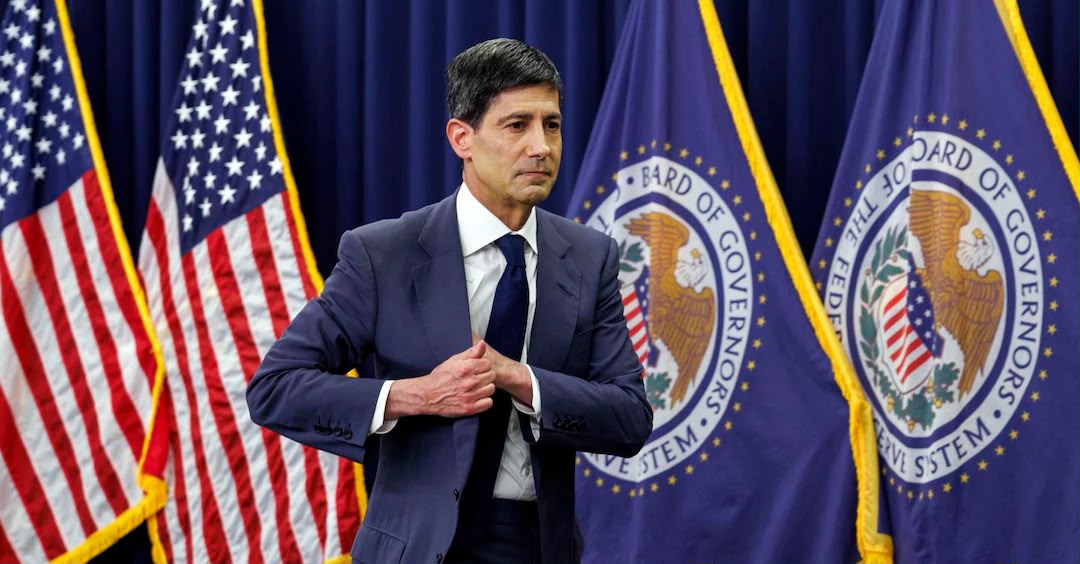
The decision marks the first major monetary policy move under Chairman Kevin Warsh, who took the role in May after being appointed by President Donald Trump. According to CNN, traders had priced in a 93 per cent probability of a hike ahead of the announcement and a Duke University survey of 32 former Fed officials found 29 in favour of tightening, with the central bank’s credibility cited as a key factor.
Markets responded with little warmth. The Dow Jones Industrial Average fell around 631 points, its worst single-day performance in close to a month. The S&P 500 slipped 0.45 per cent, while the ten-year Treasury yield closed at approximately 5.01 per cent, its highest level since 2007. The US dollar index recorded its strongest daily gain since June.
Trump, who had appointed Warsh with the stated aim of achieving lower rates, responded quickly on his Truth Social platform. He called for borrowing costs of one per cent or below and urged the Fed to act without delay, though he stopped short of criticising Warsh directly. Warsh, for his part, declined to comment on any discussions with the White House at his post-meeting press conference, stating only that he had nothing to offer on that front.
The practical impact on households will be uneven. Those already in fixed-rate savings products or loans will see no immediate change. Anyone looking to take out a new mortgage, car loan or credit facility in the months ahead is likely to find terms less favourable. Housing analysts noted that mortgage rates had already been climbing in anticipation of the decision and that the ten-year Treasury yield remains the more telling indicator of where home-loan costs are heading.
The Fed’s own projections pointed to at least one further quarter-point increase before year-end, with four of the eighteen officials who submitted forecasts expecting a cumulative half-point of additional tightening before December.