
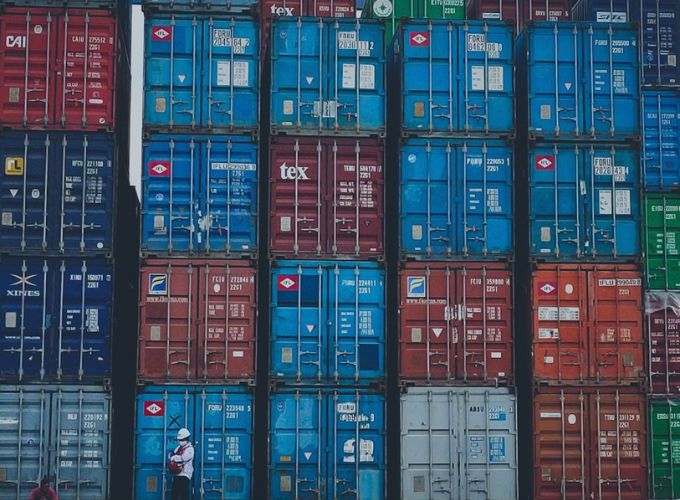


Malta’s trade deficit narrowed significantly in December, driven by a sharp drop in imports alongside an increase in exports, according to provisional data published by the National Statistics Office.
The figures show that the trade gap stood at €191.7 million in December, compared to a deficit of €368.5 million in the same month of 2024. The improvement reflects a year-on-year decrease in imports and a simultaneous rise in exports during the final month of the year.
Imports in December amounted to €647.6 million, down €116.7 million compared to December 2024. Exports, meanwhile, totalled €455.9 million, representing an increase of €60.1 million over the same period last year.
According to the NSO, the fall in imports was largely driven by lower purchases of mineral fuels, lubricants and related materials, which declined by €75.8 million. Imports of machinery and transport equipment also fell substantially, dropping by €41.6 million.
On the exports side, the strongest increase was recorded in mineral fuels, lubricants and related materials, which rose by €59.1 million in December. This category accounted for the majority of the overall increase in exports for the month.
Looking at the full year, Malta’s trade deficit narrowed by €444.1 million during 2025 when compared to the previous year, reaching €4.32 billion. Imports for the year totalled €9.21 billion, while exports amounted to €4.89 billion.
Year-on-year, imports declined by €811.0 million, with the largest reductions again recorded in mineral fuels, lubricants and related materials (€573.2 million) and machinery and transport equipment (€414.2 million). These decreases were partly offset by an increase in imports of chemicals, which rose by €188.1 million.
Exports also fell on an annual basis, declining by €366.9 million compared to 2024. The largest drops were registered in machinery and transport equipment (€204.3 million) and mineral fuels, lubricants and related materials (€181.9 million). As with imports, these declines were partly mitigated by an increase in chemical exports, which grew by €53.1 million.
Trade patterns remained broadly consistent, with the European Union continuing to dominate Malta’s external trade. Goods imports originated mainly from the EU, accounting for 61.5% of the total, followed by Asia at 19.5%. Exports were similarly concentrated, with 35.6% directed to the EU and 15.2% to Asian markets.
At a country level, imports from the Netherlands recorded the highest increase, rising by €193.0 million, while imports from Italy saw the largest decline at €172.4 million. On the export side, shipments to Turkey increased the most, rising by €45.5 million, while exports to the United States experienced the sharpest fall, decreasing by €110.3 million.
You Might Also Like
Latest Article
Endo Finance p.l.c. Launches €23 Million 5.75% Partially Secured Bond Issue
Malta-based Endo Finance p.l.c. (C 89481) has announced the launch of an issue of up to €23 million in 5.75% Bonds maturing in 2036, supporting the consolidation of the Endo Group’s financing structure and the continued development of its commercial vessel operations. The Bond Issue will be guaranteed by Endo Ventures Ltd and partially secured … Continued
|
24 July 2026
Written by Kim Vucinovic Cutajar

REVOLUT NAMED WORLD’S BEST DIGITAL BANK FOR 2026 AS REVENUE HITS £4.5 BILLION
|
24 July 2026
Written by Yannick Pace

GIANLUCA BORG NAMED CEO OF PG GROUP AFTER MORE THAN A DECADE IN SENIOR LEADERSHIP
|
23 July 2026
Written by Yannick Pace