

The United States government has thrown its financial weight behind JetZero, a Long Beach-based startup pursuing what could be the most consequential redesign of the commercial airliner in more than seven decades, after the company secured a preliminary financing agreement worth up to three billion dollars from the US Export-Import Bank.
The deal, reached last week under the bank’s Make More in America Initiative, would provide loans and guarantees to help JetZero build its first manufacturing facility. The agreement is non-binding at this stage, but it represents a meaningful signal of federal confidence in a venture that has spent years working to establish its credibility with sceptics.
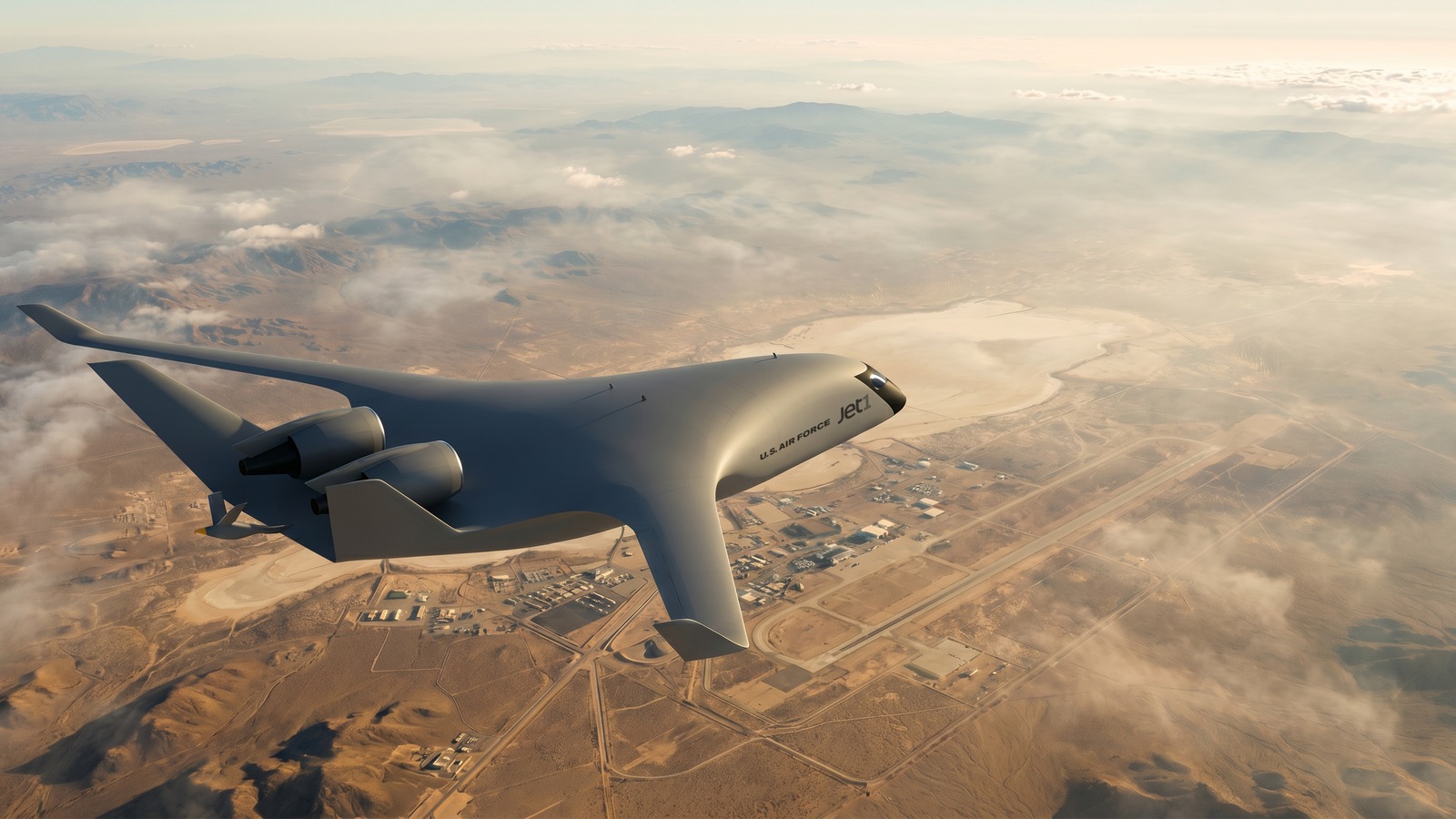
The aircraft at the centre of JetZero’s ambitions is the Z4, a blended-wing-body design that abandons the tube-and-wings configuration that has defined commercial aviation since the 1950s. Rather than the familiar silhouette of fuselage flanked by wings, the Z4 merges the two into a single continuous form – closer in shape to a manta ray than anything currently operating commercially. Chief executive Tom O’Leary is targeting a first prototype flight by the end of 2027, though only the cockpit of that demonstrator will be pressurised and a production engine has not yet been selected.
The cabin concept departs sharply from anything flying today. The Z4 is designed with four aisles, individual overhead luggage compartments for every seat and dedicated waiting areas adjacent to the lavatories. Flying at roughly 10,000 feet higher than current airliners, the jet replaces traditional windows with digital screens and introduces a ceiling skylight to bring natural light into the cabin.
JetZero has positioned the Z4 as a potential challenger to Boeing’s standing as the United States’ only major commercial aircraft manufacturer, though the distance between a promising demonstrator and a certified, revenue-generating aircraft is long and technically demanding. The programme would still need to clear pressure cycling, fatigue testing, full-envelope flight trials, icing certification, evacuation assessments and airport compatibility studies before any airline deliveries could begin, with an early-2030s production target currently in view.
The EXIM Bank agreement nonetheless gives the startup a credible institutional anchor as it works to bring broader investment and manufacturing partners to the table. For an industry closely watching Boeing navigate continued operational and reputational pressures, the arrival of a government-backed challenger with a genuinely unconventional design is a development worth following closely – even if the demonstrator has yet to leave the ground.