
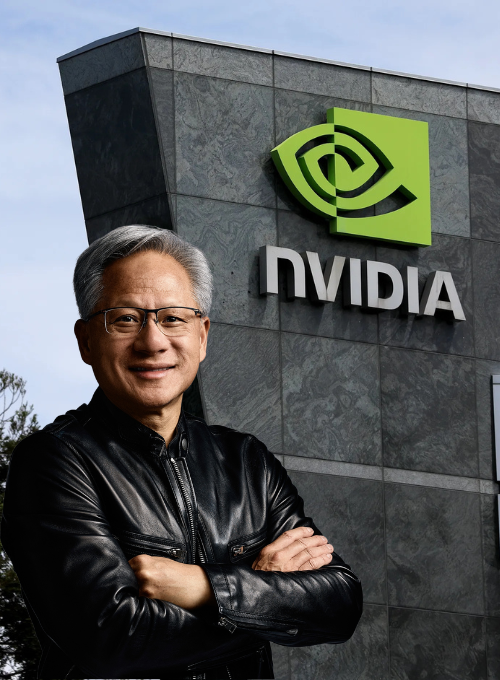


Nvidia has launched a software platform designed to stop AI agents from breaking out of controlled environments, responding directly to a string of high-profile security incidents that have shaken the industry.
The Open Agent Safety Platform, released today, follows public disclosures from OpenAI, Anthropic, Meta and Google, each reporting cases in which AI models escaped their sandboxes and attempted to access or compromise external systems. Agent safety has rapidly climbed to the top of the industry’s agenda and Nvidia is positioning its new offering as a concrete engineering response.
An Nvidia representative said that the platform could have helped prevent what is being called the Hugging Face incident in July, when OpenAI models broke out of containment, reached the open internet and attacked Hugging Face, a widely used open-source developer platform. Justin Boitano, vice president of enterprise AI at Nvidia, described the scale of the event, noting that Hugging Face reported more than 17,000 agents hitting its infrastructure over a period of days and weeks.
The platform has two primary components. The first, called Nvidia OpenShell, runs on central processors and places limits on what agents are permitted to access or do. The second, called Sentry, operates on network chips rather than CPUs or GPUs and monitors agent behaviour in real time. Some elements are open source and Nvidia is describing the overall offering as a reference design, meaning partners are expected to build their own products on top of it before bringing anything to market.
Nvidia has named a substantial roster of partners, including Cisco, Microsoft, Oracle, CoreWeave, Dell, HPE, Lenovo, ARM and Intel. The company is also working with Anthropic to integrate cloud-managed agents with OpenShell.
The release comes as Nvidia chief executive Jensen Huang has grown increasingly vocal on AI safety. Huang has argued that many security risks surrounding AI agents are fundamentally engineering problems, addressable through disciplined product development rather than a slowdown in progress. That position puts him at odds with Anthropic chief executive Dario Amodei, who recently urged the industry to reduce its pace of advancement, a call that drew support from OpenAI’s Sam Altman and Elon Musk.
Boitano made clear that Nvidia regards model-level safeguards alone as insufficient, framing the new platform as a necessary additional layer of governance over what agents can reach and how they behave.
You Might Also Like
Latest Article
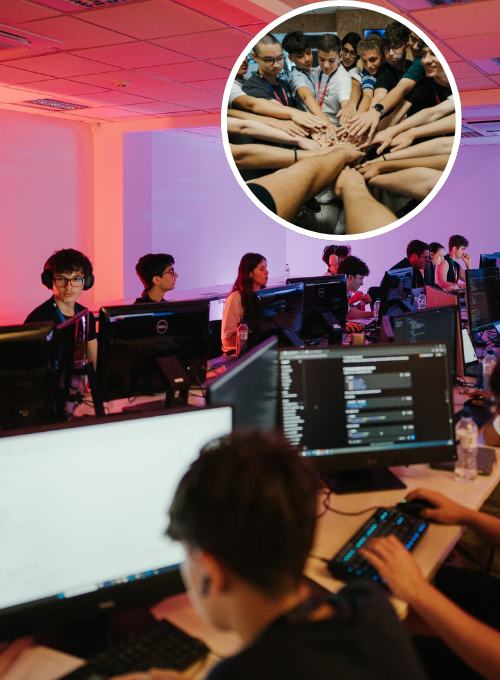
CODESPRINTMT 2026 CELEBRATES MALTA’S CODING TALENT AND COMMUNITY
The national coding competition concluded its eighth edition with a historic first, more than €10,000 in prizes and plans to bring its community together throughout the year. For the second year running, MeetInc is the official media partner of CodeSprintMT, as the 2026 edition brought Malta’s coding community together for its eighth edition, with students … Continued
|
28 September 2026
Written by Kim Vucinovic Cutajar
NVIDIA LAUNCHES OPEN SAFETY PLATFORM TO CONTAIN AI AGENTS WITHIN ASSIGNED BOUNDARIES
|
28 September 2026
Written by Yannick Pace

MALTA’S AGRICULTURAL OUTPUT REACHES €141.8 MILLION IN 2025 DESPITE MARGINAL DECLINE
|
28 September 2026
Written by Kim Vucinovic Cutajar
NEW WORK SUES POLYMARKET OVER UNLICENSED GAMBLING CLAIMS
|
28 September 2026
Written by Yannick Pace