
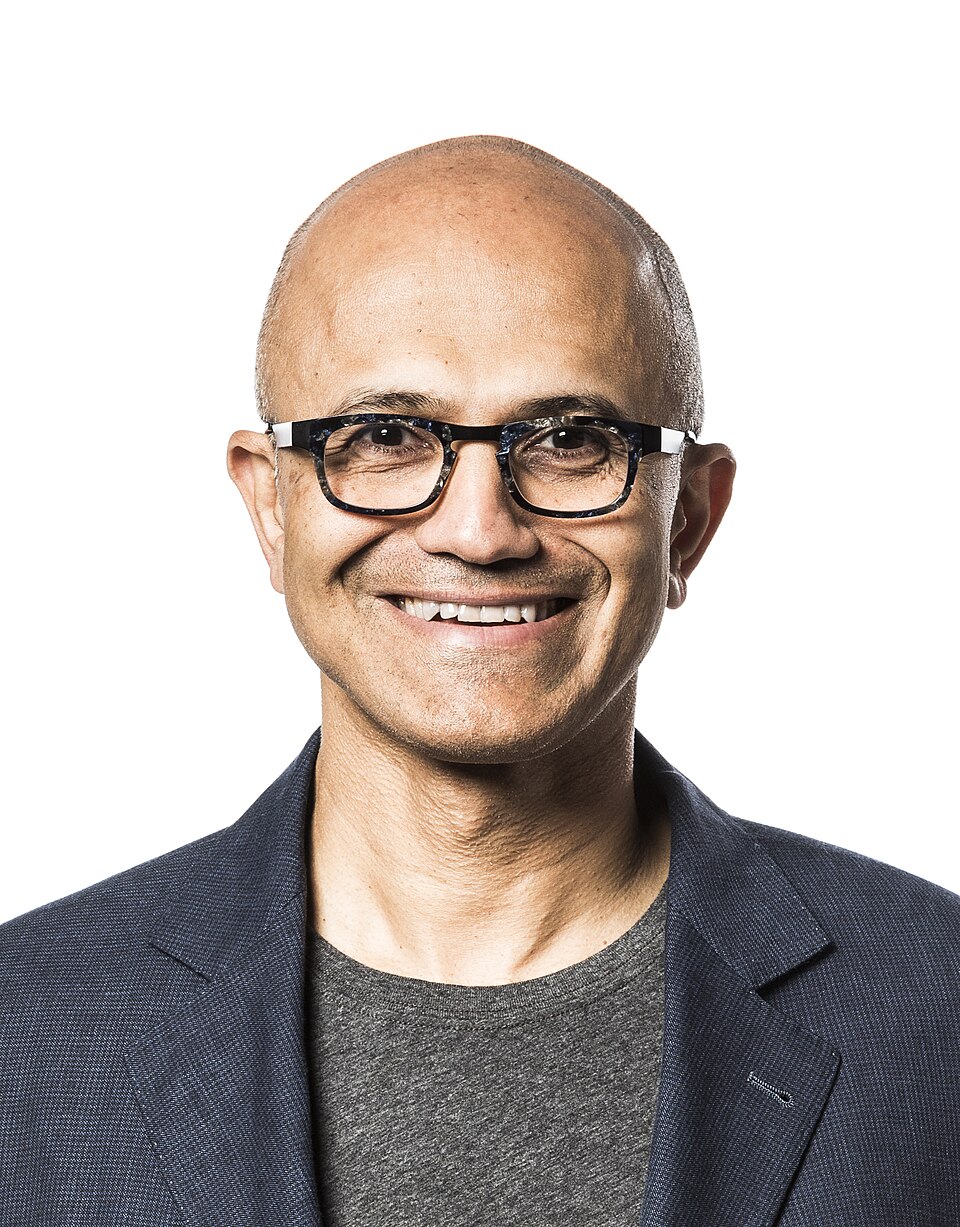


Microsoft chief executive Satya Nadella has warned that companies embracing AI without maintaining control over their data and decision-making could ultimately drive themselves out of existence.
Speaking on CNN’s Fareed Zakaria GPS, Nadella cautioned businesses against sharing too much with third-party AI models, whether proprietary data, internal processes, or employee prompts. His recommendation is that companies use AI gateways, dedicated intermediaries that capture usage data internally, so that organisations can eventually train or fine-tune their own open-weight models rather than remaining permanently dependent on external providers. Any business that fails to retain that control, he argued, risks outsourcing its institutional thinking entirely and with it, its reason for existing.
As reported by Futurism, the comments land at a moment when businesses are already wrestling with the financial sting of AI adoption, including unexpectedly steep token bills. Nadella’s warning adds a longer-term strategic dimension to those concerns, shifting the conversation from cost management to competitive survival.
The irony of the position is hard to miss. Microsoft is one of the world’s foremost AI vendors and its chief executive is effectively advising customers to be wary of over-relying on exactly the kind of proprietary AI software his company sells. There is, however, a commercially coherent logic at work. Microsoft operates the cloud infrastructure on which open-weight models are typically hosted, so a broader industry shift towards self-hosted AI would benefit the company’s infrastructure business.
Open-weight models have attracted considerable interest as a more affordable alternative to closed, proprietary systems. Unlike closed-source tools, they make their underlying numerical parameters publicly accessible, allowing businesses to download, customise and run them on their own terms. Nadella’s argument is that companies should keep the AI model, the surrounding software harness and their stored data and organisational memory as separate layers. That separation allows businesses to swap models in and out as the technology evolves without losing accumulated knowledge or starting from scratch.
The broader message is one of architectural flexibility over lock-in. Businesses that build entirely around a single proprietary model leave themselves exposed should that model change, degrade, or be superseded. Keeping those layers distinct, Nadella suggested, is what allows a company to remain genuinely in charge of its own direction.
It is worth noting that Nadella drew a distinction between businesses and individual consumers, suggesting that regular users might reasonably exchange their data for free services, much as the advertising model has long operated. For businesses, though, he was considerably less relaxed.