


Malta sourced 17.2% of its total energy from renewable sources in 2024, marking a year-on-year increase of almost two percentage points, according to newly released Eurostat data.
The figures underline a steady shift in Malta’s energy mix over the past decade. In 2014, renewable energy accounted for just under 5% of national consumption. Ten years on, that share has more than tripled, reflecting sustained investment in renewable infrastructure and energy efficiency measures.
At 17.2%, Malta now ranks ahead of several EU member states, including Ireland, Luxembourg and Belgium, and is closing in on Poland’s renewable energy share of 17.8%. While the country remains below the EU average of 25.2%, the latest data suggests Malta is narrowing the gap faster than many of its peers.
Malta also recorded one of the strongest annual increases in renewable energy use across the European Union. Its 1.8 percentage point rise compared to 2023 was surpassed by only four countries: Latvia, the Netherlands, Denmark and Lithuania.
Across the bloc, Sweden continued to lead the way, with renewable sources accounting for 62.8% of its energy consumption, followed by Finland at 52.1% and Denmark at 46.8%. These figures highlight the contrast between northern European countries with extensive natural resources and smaller states like Malta, which face structural and geographical limitations.
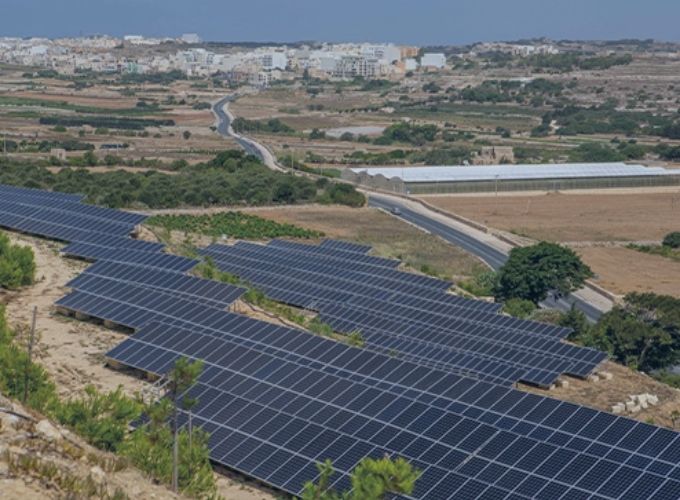
The Energy Ministry said the results reflect the impact of targeted financial incentives, support schemes and policy measures aimed at accelerating the transition away from fossil fuels. These efforts have largely focused on expanding solar energy generation, improving energy efficiency and encouraging households and businesses to invest in renewable technologies.
Energy Minister Miriam Dalli welcomed the findings, stating that Malta is on course to meet its renewable energy targets. She attributed the progress to the coordinated work of public entities responsible for implementing support schemes, as well as strong public participation.
While land availability and population density continue to limit large-scale renewable projects, the consistent year-on-year gains suggest that Malta’s approach is delivering measurable results. The latest Eurostat data places Malta among the faster-improving EU countries when it comes to increasing the share of renewable energy in its overall energy mix.