
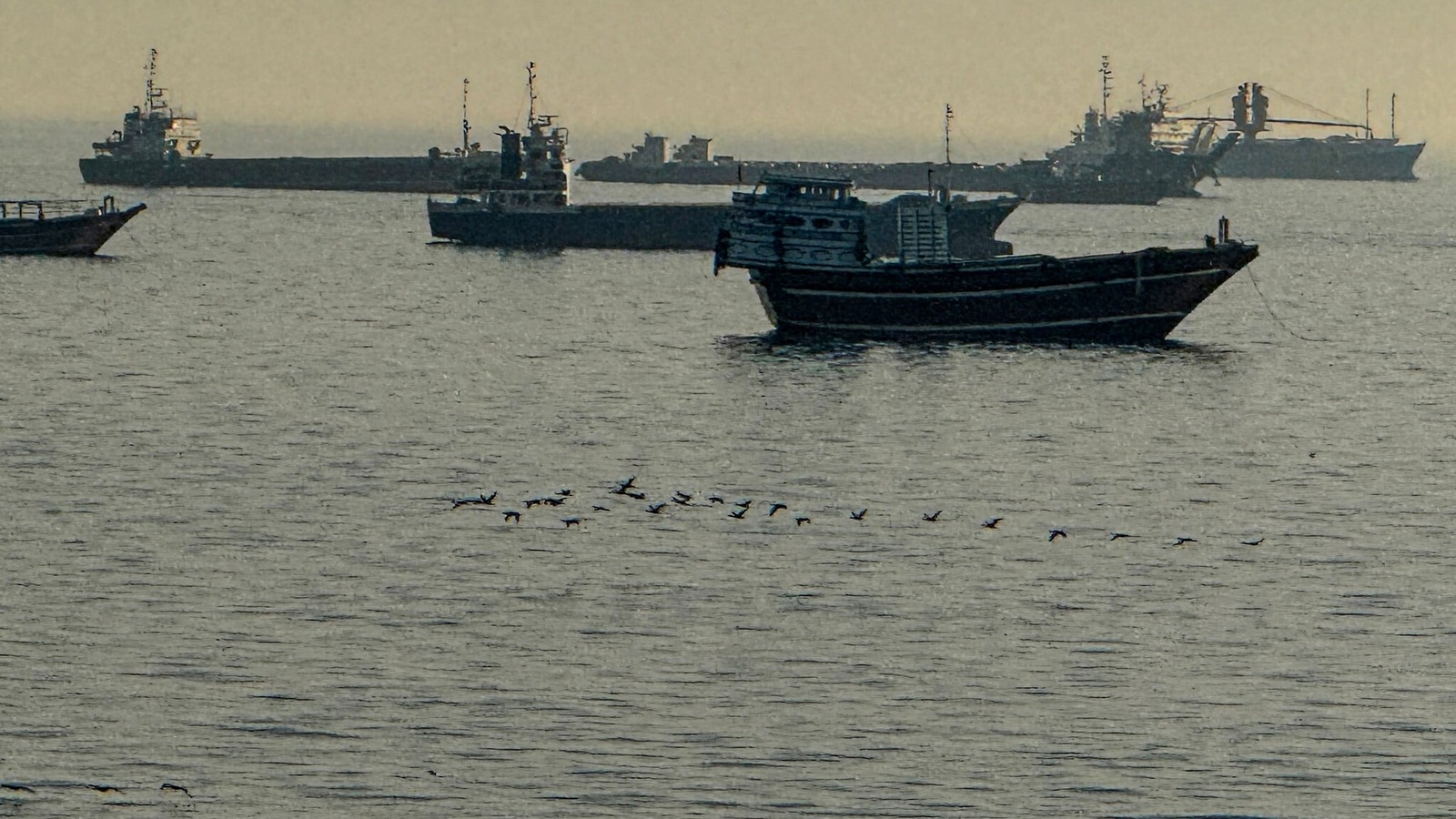


Iran's military announced yesterday that it had closed the Strait of Hormuz to all vessels, citing alleged breaches of a ceasefire deal by the United States and Israel. The move has sparked concerns about global oil supplies, as the strait is one of the world's busiest shipping channels. Approximately 20% of the world's oil and liquefied natural gas passes through it.
The closure was announced in response to continued Israeli strikes in Lebanon, which Iran claims violate the ceasefire agreement signed by the US and Iran earlier this week. The deal outlined 14 points aimed at bringing an end to the conflict. However, the United States has disputed Iran's claim that the strait is closed, with Vice-President JD Vance stating that there was no evidence of a shutdown.
Commercial ship traffic through the strait appears to be unaffected, according to US Central Command (Centcom). The organisation reported that 55 merchant vessels passed through on June 20, with safe passage remaining intact. Centcom added that ships moved more than 17 million barrels of oil to global markets, despite Iran's claims.
Talks between US and Iranian representatives are scheduled to take place in Bürgenstock, Switzerland, on June 21, facilitated by Pakistan's foreign ministry. Mediators from Pakistan and Qatar will also attend the negotiations, which aim to advance understandings reached in the 14-point memorandum. Iran has stated that it will use the talks to demand that the other side meet its commitments.
The closure of the Strait of Hormuz has significant implications for global oil supplies, with many countries reliant on imports from the region. The situation remains uncertain, and further developments are expected in the coming days as negotiations between the US and Iran continue.