

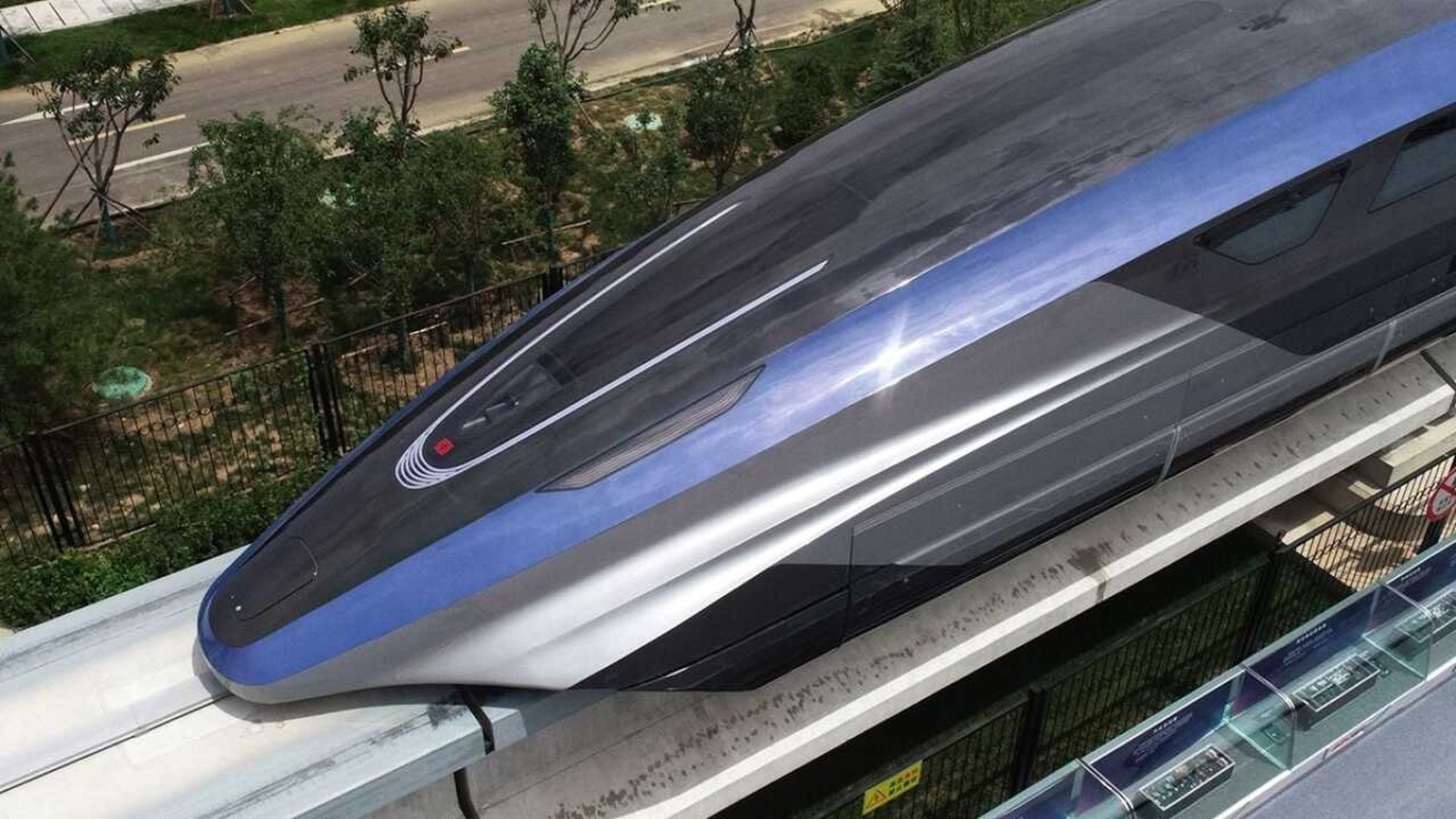


China’s experimental maglev train has broken the world record for short-distance acceleration for the third time in six months, reaching 800 kilometres per hour from a standing start in just 5.3 seconds during a test run at Donghu Laboratory in Hubei province.
The 1.1-tonne prototype completed the run on a one-kilometre test track. Notably, it also demonstrated controlled braking, coming to a smooth halt within roughly 200 metres of hitting peak speed. That combination of extreme acceleration and reliable stopping performance marks a meaningful step forward for the programme.
The same train first set a world record in June 2025, reaching approximately 650 kilometres per hour in seven seconds. Subsequent tests pushed that figure to around 700 kilometres per hour and then to 798 kilometres per hour, each time cutting the time taken to get there. The latest run represents the sharpest short-distance maglev acceleration ever recorded.
Maglev technology works by using magnetic force to lift a train fractionally above its track, eliminating the friction that constrains conventional rail. Coils embedded in the track generate a magnetic wave that drives the vehicle forward. At 800 kilometres per hour, that principle is being pushed well beyond anything in commercial service. China’s fastest operating maglev, the Fuxing rail, tops out at 350 kilometres per hour; mainstream maglev services in China and Japan run at around 320 kilometres per hour.
Researchers used each successive trial to stress-test critical systems, including high-power energy delivery, electromagnetic propulsion, levitation control at extreme velocity and emergency braking, according to state broadcaster CCTV.
The technology is not intended for passenger use at this stage. Scientists working on the project have indicated that the underlying principles could eventually be applied to launch systems for rockets and fighter jets rather than commuter or intercity rail.
Chinese researchers are also exploring ultra-high-speed maglev operation inside low-pressure and vacuum tubes, though that work faces its own challenges around infrastructure cost, track precision and passenger safety.
A parallel programme at China’s National University of Defence Technology has separately recorded an acceleration of 697 kilometres per hour in two seconds, pointing to competitive development across multiple teams and a broader momentum behind ultra-high-speed rail research in the country.