Seven years ago Como were playing in Italy’s fourth tier. This week they scored nine in the Champions League. Behind the goals is one of the boldest business experiments in European football.
The Numbers At A Glance
- 9-1 away at Lens, matching the biggest winning margin in Champions League history
- 3 wins from 4 in their first ever Champions League campaign, with 19 goals scored
- Serie D to Champions League in seven years
- Under €1m reportedly paid for the club in 2019
- €330m valuation, according to Football Benchmark in April 2026
Nine Goals In France
On Wednesday night, Como went to Lens and won 9-1. No away side had ever scored nine in a Champions League match. Only Bayern Munich had scored nine in a game at all.
Greek striker Tasos Douvikas scored a hat-trick and now leads the competition with six goals. Nico Paz, Lucas Da Cunha, Marc-Oliver Kempf, Mattia Liberali and Martin Baturina also scored. The ninth came from Matteo Papaccioli, an 18-year-old from the youth team who has not yet played a Serie A match.
It was no fluke. Como opened their debut campaign by beating RB Leipzig 4-1. After a narrow 3-2 defeat in Rotterdam to Feyenoord, they beat Manchester United 4-1 by the lake. They now sit fourth in the 36-team table on nine points, behind only Paris Saint-Germain, Real Madrid and Arsenal.
This is a club that had never played a single European match in its 119-year history until September. To understand how it got here, you have to look past the pitch.
From Bankruptcy To Billionaires
Como’s modern story starts in ruins. The club went bust more than once in the 2000s and 2010s and by 2017 it had been refounded as Como 1907 in Serie D, Italy’s semi-professional fourth tier. Its income was under €1 million a season.
In April 2019 the club was bought by SENT Entertainment, a London-based arm of Indonesia’s Djarum Group. Djarum belongs to Robert Budi Hartono and his late brother Michael, who died in March 2026 and were long ranked Indonesia’s richest men. Their fortune comes from cigarettes and a controlling stake in Bank Central Asia.
Reports on the price differ, from €200,000 to €850,000. Either way, it was a rounding error for a family worth tens of billions.
Here’s the twist: the Hartonos never set out to run a football club. SENT’s original plan was a reality television series following young Indonesian players through European football, with Como as the backdrop. The show didn’t take off. The club, and the lake around it, turned out to be the more valuable asset.
So SENT pivoted. Mirwan Suwarso, a Djarum executive and now the club’s president, was handed the job of turning a structurally loss-making club into a business.
- 2019: promoted from Serie D
- 2021: Serie C champions, up to Serie B
- 2022–23: Cesc Fàbregas arrives as a player, then becomes a shareholder; Thierry Henry also invests
- 2023: Fàbregas retires and moves into coaching
- 2024: promotion to Serie A after a 21-year absence
- 2025: 10th in Serie A
- 2026: 4th in Serie A and Champions League qualification, ahead of Juventus and AC Milan
The Disney Model
Suwarso has been unusually open about the plan. He wants a model like Disney’s, with the lake at the centre of the business. The football team is the attraction that draws people in. The money is meant to come from everything around it.
In that model, Lake Como is the master brand and the club is the theme park. It’s a lake already famous for George Clooney, luxury hotels and wealthy visitors from around the world. As Suwarso puts it, Lake Como is not a budget destination.
What The Club Sells Besides Football
- Merchandise. Sales have grown from tens of thousands of euros a year before the takeover to more than €10 million, with a target of €34 million to €40 million. Shirts make up only about a third of it. Como bags have been sold in Harrods.
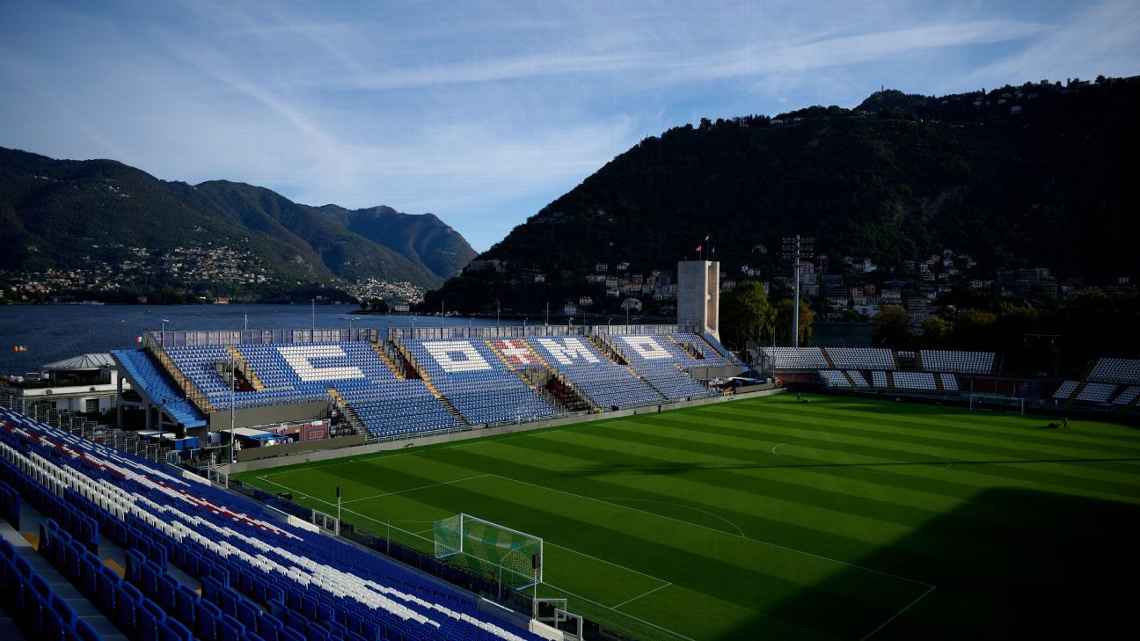
- Matchday as tourism. Many tickets go to visitors who plan a lake holiday around a game. The Sinigaglia, which sits right on the water, sells out.
- Hospitality. A private members’ club in a lakeside villa, run separately from the team, is due to open this autumn.
- Ventures. Como Ventures, launched with athlete-led investment firm The Players Fund, backs start-ups and sells the club’s in-house technology to others.
- Stadium. Populous, the firm behind the Tottenham Hotspur Stadium, has designed a rebuilt, roughly 15,000-seat Sinigaglia, targeted for 2028.
Why It’s Different
Most clubs rely on winning to grow and their income swings with results. Como’s bet is that a premium lifestyle brand, tied to one of the most photographed places in Europe, can earn money whether the team wins or loses. Club executives have even said they have no sporting goals as such. The goal is a business worth €1 billion.
The Champions League run changes the maths. A debut campaign could bring in €30 million to €50 million in UEFA money alone and a global audience that just watched a lakeside club put nine past Lens.
The Football: Fàbregas And A Lot Of Money
A lifestyle brand still needs a team worth watching and that is where Cesc Fàbregas comes in.
The former Arsenal, Barcelona and Chelsea midfielder joined Como as a player in 2022, bought a stake, retired and stepped into coaching. In his first season in charge he won promotion. In his second, Como finished 10th in Serie A. In his third, they finished fourth on 71 points, sealing a Champions League place with a 4-1 win at Cremonese on the final day while AC Milan lost at home to Cagliari. It made this season’s Champions League the first ever without either Milan or Juventus. Fàbregas was named Serie A Coach of the Year.
His teams play attacking, possession football, and he has been a recruitment magnet in his own right. Young players with big-club pedigree, such as Real Madrid academy graduate Nico Paz, have chosen Como because of him.
The Spending
The other ingredient is cash. La Gazzetta dello Sport reports Como spent around €342 million on players between the 2024/25 season and August 2026, with about €127 million in the most recent summer alone. Few clubs anywhere have invested so heavily so quickly.
That money bought quality, but it was spent with a clear idea: young, technical, resaleable players who fit Fàbregas’s style. Last night’s ninth goal came from an 18-year-old from Como’s own youth team, a sign the club is also building from within.
The Catch: Who’s Paying?
None of this is cheap and the club’s own accounts show it.
| Year to June | Revenue | Net loss |
|---|---|---|
| 2024/25 | €55.4m | €105.1m |
| 2023/24 | €9.8m | €47.8m |
| 2022/23 | €12.1m | €18.5m |
Club company figures, as analysed by The Esk from filed accounts.
The owners had put almost €300 million into the club by late 2025. In 2024/25, staff costs were 155 per cent of revenue, meaning the club spent more on wages than it earned in total. More than half of that year’s income came from Serie A television money, not from the lake.
The risks are real:
- Owner dependence. Without the Hartonos’ money the model doesn’t yet stand up. One analysis estimates the club will still need at least €100 million from its owners this season, even with Champions League income.
- Rules. Calcio e Finanza reported in March that a settlement with UEFA over its spending rules was expected.
- Valuation hype. The €1 billion figure is a target, not a price anyone has paid. Football Benchmark put the club at €330 million in April.
- The stadium. The Sinigaglia holds just over 13,000. The rebuild has no published cost or financing yet, and a historic lakeside site brings planning headaches.
- Keeping Fàbregas. Bigger clubs have circled him. Much of the project’s appeal is tied to one man.
- Local tension. Tourist-first ticketing and a luxury image don’t always sit easily with long-standing local fans.
To be fair, the club says it expects to break even within a few years and commercial income has grown tenfold in a single year. Whether that growth can catch up with the spending is the real test.
What Malta Can Learn From A Lake
Malta knows the raw material Como is working with: a small place, a world-famous setting and a tourism economy built on sun, water and premium visitors. Three ideas travel well.
- Sell the place, not just the product. Como’s real asset is Lake Como. Maltese brands, from hotels to sports clubs, could lean far harder on the islands themselves as the story.
- Turn fans into visitors and visitors into fans. Como plans holidays around matchdays. Malta already hosts international events and training camps. Packaging sport, hospitality and lifestyle together is an obvious next step.
- Patience, and deep pockets, are not optional. Como lost nearly €190 million in six years before reaching this point. Any copycat needs to know the bill comes long before the reward.
You Might Also Like
Latest Article
COMO 1907: THE CLUB THAT BOUGHT A POSTCARD AND BUILT AN EMPIRE
Seven years ago Como were playing in Italy’s fourth tier. This week they scored nine in the Champions League. Behind the goals is one of the boldest business experiments in European football. The Numbers At A Glance Nine Goals In France On Wednesday night, Como went to Lens and won 9-1. No away side had … Continued
|
7 November 2026
Written by Yannick Pace

NSO REPORT FINDS MALTA’S INDUSTRIAL PRODUCTION RISES BY 7.1% IN SEPTEMBER 2026
|
6 November 2026
Written by Kim Vucinovic Cutajar

YE RETURNS TO THE CATWALK WITH YEEZY SEASON 01 IN LOS ANGELES
|
6 November 2026
Written by Yannick Pace