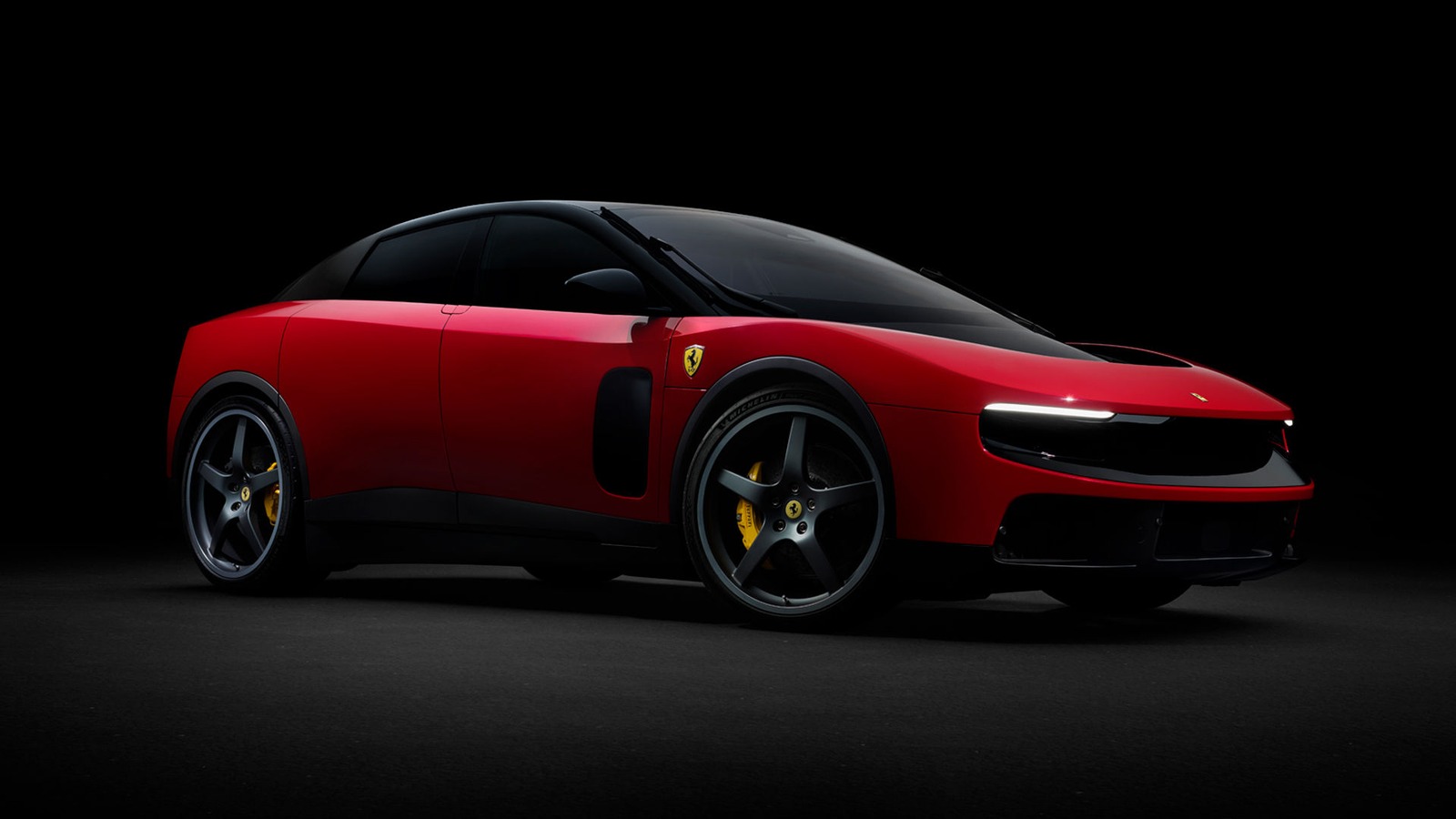


Ferrari has already sold out its entire 2026 production allocation of the Luce, its debut electric vehicle, just two months after the car’s public unveiling – and in spite of a notably turbulent reception from press and public alike.
The news comes not from Ferrari directly but from sources with knowledge of the matter who spoke to the Financial Times. Those sources say Ferrari had set a first-year sales target of just under 500 units for the Luce. That figure was reportedly reached earlier this month, suggesting that buyer appetite for the marque’s first fully electric model has held firm regardless of the controversy surrounding it.
The Luce has attracted fierce criticism since its reveal, much of it aimed at the car’s unconventional aesthetic. The design is the work of Jony Ive, the former Apple chief design officer behind the iPhone and iMac. Online reaction was unkind, with some observers drawing unfavourable comparisons to the Nissan Leaf – a mass-market EV available at a fraction of the Luce’s 550,000-euro starting price, equivalent to roughly $633,000. Ferrari’s share price fell after the unveiling, former chairman Luca di Montezemolo publicly suggested the car should not carry the Ferrari badge and Lamborghini’s chief executive took the opportunity to reaffirm his own company’s decision to step back from its first EV programme. Ferrari’s marketing director also departed after 16 years with the brand last month, adding further noise to an already difficult launch period.
The order book, however, tells a different story. Ferrari operates on an entirely different commercial logic to volume manufacturers. The company sold just 13,640 cars in total during 2025 – a figure that reflects a deliberate strategy of keeping supply tight and exclusivity intact. An annual Luce allocation of fewer than 500 units is entirely consistent with how the brand manages demand.
Looking further ahead, Ferrari is reported to be targeting sales of around 2,500 Luces by 2030, implying roughly 600 examples per year as production scales. Given how quickly the 2026 allocation has been absorbed, that longer-term trajectory looks credible. The controversy, it seems, has done little to dampen the enthusiasm of the buyers who matter most to Maranello.