

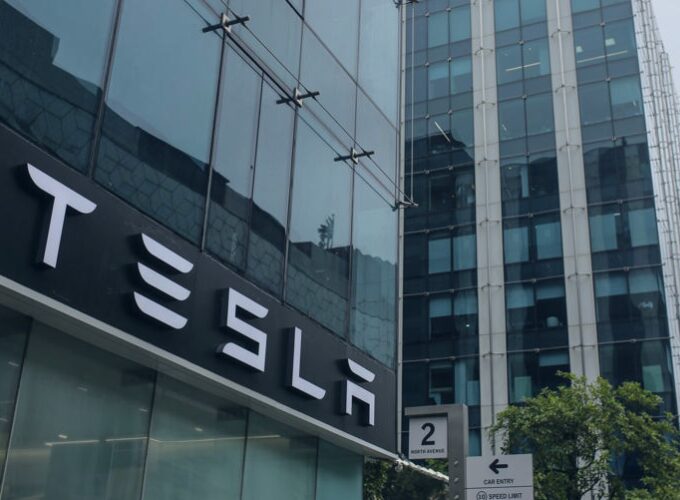


Tesla has warned of a turbulent period ahead as Donald Trump’s anti-EV policies begin to take effect, slashing incentives and threatening a key source of the company’s revenue. The carmaker’s second-quarter profits fell 23% to $1.4 billion, while revenues declined 12% year-on-year to $22.5 billion.
The company is grappling with multiple headwinds: declining consumer interest, increasing competition, and now the removal of electric vehicle and solar subsidies under Trump’s new fiscal legislation. The former US president’s so-called “big, beautiful bill” not only scrapped EV purchase incentives, but also ended the regulatory credit system that enabled Tesla to sell emissions credits to more polluting manufacturers — a historically profitable side of the business.
“We are in the transition period where we will lose a lot of incentives in the US,” Elon Musk said. “We probably could have a few rough quarters.”
The announcement triggered a 6% drop in Tesla’s share price in pre-market trading on Thursday, deepening a longer-term slide that has seen the stock fall by 30% since its December peak.
Tesla’s fortunes have also been affected by Musk’s increasingly political profile. His recent fallout with Trump — after briefly serving in the White House as head of the newly created Department of Government Efficiency (Doge) — has created confusion among customers and investors alike. His subsequent exit from the administration and public criticism of Republican budget policies have fed a growing backlash.
Once seen as a clean energy pioneer, Tesla is now facing stiffer competition in the EV market, particularly from Chinese brands and new western entrants. An ageing product line and declining consumer sentiment have compounded the pressure, with sales softening across major markets.
Despite hitting earnings estimates, the company’s outlook remains uncertain. Executives warned that the combined impact of reduced subsidies, political turbulence, and competitive threats will make the next few quarters especially difficult.
Tesla’s share of the US EV market remains dominant, but its growth trajectory is slowing — and the road ahead, by Musk’s own admission, could be bumpy.
You Might Also Like

Latest Article
NSO Report Finds That Malta’s Research And Development Expenditure Reaches €140.2 Million In 2024
NSO report finds that Malta invested €140.2 million in research and development (R&D) during 2024, marking a significant increase of €19.2 million compared to the previous year. The total expenditure represented 0.6% of the country’s Gross Domestic Product (GDP), reflecting continued investment in innovation across multiple sectors. The NSO data shows that Basic Research accounted … Continued
|
28 July 2026
Written by Kim Vucinovic Cutajar
MUSK’S NET WORTH FALLS BELOW $700BN AS SPACEX SHARES DROP A FURTHER 4.8%
|
28 July 2026
Written by Yannick Pace

JOHNSON & JOHNSON AGREES $5.5BN SETTLEMENT OVER TALC CANCER LAWSUITS
|
28 July 2026
Written by Yannick Pace