




OpenAI, the company behind ChatGPT, is set to mass produce its own artificial intelligence chips from next year in a landmark deal with Broadcom. The $10 billion partnership marks a major step for the San Francisco-based firm as it seeks to reduce reliance on Nvidia and secure the vast computing power needed for its next generation of AI models.
The chip, co-designed with US semiconductor giant Broadcom, will be tailored specifically for OpenAI’s internal use, powering the training and deployment of systems such as GPT-5, according to a report in the Financial Times. Unlike Nvidia’s widely available processors, these custom chips are not expected to be sold on the open market, underscoring how OpenAI is prioritising compute capacity to meet soaring demand.
The move places OpenAI alongside other tech giants like Google, Amazon and Meta, which have all developed their own specialised chips to run AI workloads. With AI adoption accelerating globally, control over hardware is increasingly viewed as essential to scaling products and services.
Broadcom’s chief executive Hock Tan hinted at the deal during an earnings call on Thursday, pointing to a “mystery new customer” committing to $10 billion in orders. People familiar with the matter confirmed that customer is OpenAI. Tan said the agreement would bring “immediate and fairly substantial demand,” with shipments starting in 2026.
The partnership could have big implications for the AI hardware market, long dominated by Nvidia. While Nvidia remains the industry leader, analysts have noted that Broadcom’s custom chip division could grow faster than Nvidia’s core business by 2026. Broadcom shares jumped nearly 9% in pre-market trading on Friday, adding to gains of more than 30% this year.
OpenAI chief executive Sam Altman has been open about the need for more computing power, describing it as the company’s biggest bottleneck. Last month, he said OpenAI was doubling its compute fleet over the next five months to support the rollout of GPT-5 and other products. The deal with Broadcom gives the company a clearer path to securing that capacity in the long term.
For OpenAI, this is about more than just chips — it is about controlling the infrastructure that underpins the global AI race. With demand from businesses and consumers only growing, the battle for dominance is moving deeper into the hardware layer of the industry.
You Might Also Like

Latest Article
Malta To Allow 16-Year-Olds To Open Companies Under New ‘Youth Enterprise’ Legal Framework
Young people in Malta will soon be able to open their own companies from the age of 16 under a new legal framework announced by the government. The initiative, known as Intrapriża16, introduces a special type of company called a “Youth Enterprise”, allowing 16- and 17-year-olds to formally start and operate a business before they … Continued
|
13 March 2026
Written by MeetInc.
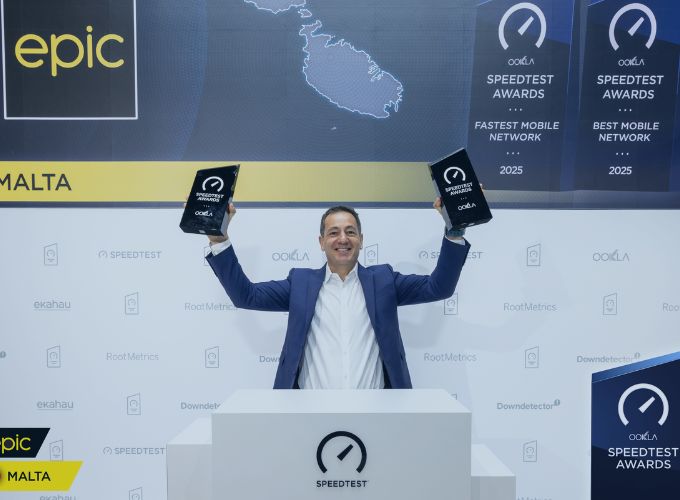
Epic Wins Malta’s Fastest Network Award At Mobile World Congress
|
13 March 2026
Written by MeetInc.

MeDirect Targets Return To Profitability After Ownership Change And 2025 Reset
|
12 March 2026
Written by MeetInc.