

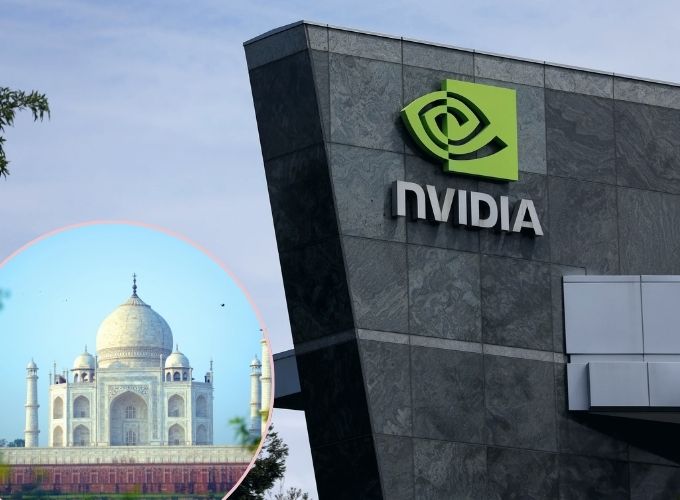


Nvidia, the US chipmaker turned AI titan, has achieved a market valuation of $4.3 trillion, overtaking India’s entire economy, which ha a nominal GDP of around $4.19 trillion. This milestone comes even as Nvidia shares have recently dipped, underscoring just how far the company has come from its graphics chip roots.
On paper, one company is now “worth more” than a nation with over 1.4 billion people – a reminder of how tech valuations and national GDPs are playing out in very different arenas. India, in the quarter ending June, posted strong economic growth (notably in services, manufacturing, and construction) yet still trails behind Nvidia’s market cap in raw value.
This isn’t just about bragging rights. Nvidia’s rise reflects its central role in powering artificial intelligence infrastructure – everything from data centres to autonomous vehicle platforms depends on its chips and technology. The surge has also shone a spotlight on how governments are increasingly involved in steering or regulating these giants.
For example, in recent weeks, the company quietly announced a plan to invest $5 billion in rival chipmaker Intel – a move that observers suggest has been influenced by US policy and pressure. Nvidia has also agreed to set aside 15% of the revenue it earns from selling advanced chips in China to comply with strict US export controls. In practice, this means a chunk of its China sales will effectively be reserved for meeting licensing rules and government requirements, rather than going straight into profits.
There’s also a dimension of risk. High valuations leave little room for error. Global supply chain constraints, rising energy costs, and geopolitical tensions – especially around China and export controls – all pose threats. Not to mention regulatory pushback if tech firms are seen as too dominant.
Still, the company’s trajectory is impressive, successfully transitioning from a PC graphics card developer to becoming the backbone of pretty much all modern AI systems. The fact that one company can surpass the nominal GDP of a country like India speaks to just how transformative the AI era has become.