
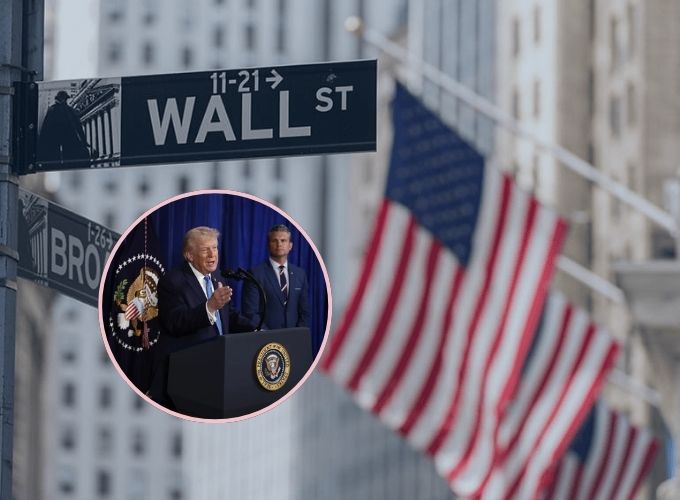


Global financial markets pushed higher this week despite the United States’ military intervention in Venezuela, underscoring how investors have grown accustomed to President Donald Trump’s unconventional approach to geopolitics.
Equities hit fresh highs across global, Asian and emerging market indices on Monday, even after Washington confirmed it had captured Venezuelan president Nicolás Maduro and taken control of the country’s governance pending a leadership transition.
Rather than triggering a risk-off reaction, the episode followed a now-familiar pattern: brief volatility, followed by renewed market focus on fundamentals. Similar rallies were recorded after US military actions in Iraq, Yemen, Iran and Syria over the past year.
Investors appear to have adapted quickly to what analysts describe as Trump’s departure from the post-war, rules-based international order. Instead of reacting to geopolitical headlines, markets are being driven by optimism around artificial intelligence, expectations of stronger corporate earnings, and the prospect of further US interest rate cuts as inflation cools.
Bond markets reflected weaker US economic data rather than geopolitical stress, while precious metals extended gains carried over from last year. The dollar ended the session lower, and emerging market currencies such as the Mexican and Colombian pesos recovered from early losses.
Oil prices briefly dipped on expectations that US control over Venezuela could eventually unlock the world’s largest proven crude reserves, before closing higher by the end of the session. Analysts noted that, over the longer term, a stabilised Venezuelan oil sector could support global supply and limit price shocks — a potentially positive outcome for corporate margins.
Market strategists say the muted response highlights a broader shift in how investors process geopolitical risk. With no immediate disruption to global demand, supply chains or financial conditions, most see little reason to reassess earnings outlooks.
“Markets have learned that single geopolitical events often create short-term volatility, but not lasting damage, unless they trigger sustained inflation or energy shocks,” analysts told Bloomberg.
This dynamic is reinforced by recent history. While major conflicts such as Russia’s invasion of Ukraine reshaped markets due to their impact on energy prices and inflation, many other geopolitical flashpoints have faded quickly from investor focus.
The Venezuela intervention, some analysts argue, fits into a long historical pattern of US involvement in Latin America rather than signalling a fundamentally new foreign policy direction. As a result, markets have treated it as background noise rather than a systemic risk.
For now, investors remain anchored to a familiar set of drivers: AI-led productivity gains, earnings growth, and central bank policy. Unless geopolitical events translate into sustained economic shocks, markets appear content to look past them.
You Might Also Like

Latest Article
ALAN CUSCHIERI LEAVES FINANCEMALTA GOVERNOR ROLE AFTER FOUR-YEAR TERM TO FOCUS ON MONEYBASE
Alan Cuschieri has announced that he is stepping down as Governor of FinanceMalta after four years in the role, saying he will now dedicate more of his time to the continued growth of Moneybase. Cuschieri joined FinanceMalta in 2022 with a clear objective: to strengthen Malta’s fintech proposition and raise the country’s profile within the … Continued
|
27 July 2026
Written by MeetInc.

Endo Finance p.l.c. Launches €23 Million 5.75% Partially Secured Bond Issue
|
24 July 2026
Written by Kim Vucinovic Cutajar

REVOLUT NAMED WORLD’S BEST DIGITAL BANK FOR 2026 AS REVENUE HITS £4.5 BILLION
|
24 July 2026
Written by Yannick Pace