


Malta has emerged as one of Europe’s early movers on artificial intelligence, but adoption across its business landscape, particularly among smaller firms, remains uneven, according to findings presented at a European conference on the future of work and AI.
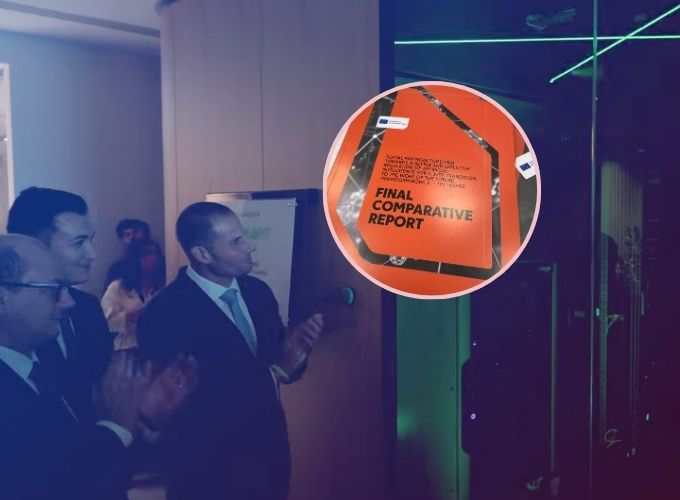
The conclusions were drawn from the final comparative report of the TransFormWork 2 project, presented during the conference currently taking place in Sofia, where The Malta Chamber of Commerce, Enterprise and Industry is participating.
The report highlights Malta’s unusually advanced policy positioning for a country of its size. Over the past years, the country has introduced a national AI strategy, established regulatory structures and integrated artificial intelligence into broader economic planning frameworks.
More recently, this direction has been reinforced through Malta’s updated AI strategy and Vision 2050, which position AI not only as a driver of competitiveness but also as a tool for trust, sustainability and social wellbeing.
This push is also being supported by direct government intervention, including a €100 million fund aimed at helping companies invest in AI, automation and digitalisation, as well as new initiatives focused on equipping citizens with practical AI skills. These include the development of courses designed to help individuals understand how AI works and how it can be applied in specific professional and everyday contexts.
This top-down approach appears to be translating into relatively strong uptake at an individual level. Speaking in a recent interview with MeetInc, Silvio Schembri said that during discussions with OpenAI, the company identified Malta as one of the highest users of ChatGPT globally, with roughly a third of the population making regular use of the tool. That kind of feedback reinforces the perception that AI tools are already widely embedded in everyday workflows.
However, the report identifies a clear gap between national ambition and business-level implementation.
While some organisations are already using AI, many — particularly small and medium-sized enterprises — remain at an early stage. Others are still planning adoption, and a significant share lack internal frameworks governing how AI systems should be used.
This uneven diffusion is especially relevant in Malta, where SMEs account for the vast majority of businesses.
Where AI is being deployed, it is often concentrated in administrative and operational functions such as finance, scheduling and data management, rather than in core or customer-facing processes. In sectors such as education and financial services, usage remains largely focused on efficiency gains rather than transformation.
The workplace impact of AI is also becoming more visible. While organisations report improvements in productivity and service delivery, the report points to changes in job roles, working patterns and, in some cases, reduced employee autonomy.
At the same time, governance practices appear inconsistent. Although Malta’s policy framework emphasises the “human-in-control” principle and the role of social dialogue, employee involvement in AI deployment varies widely across organisations.
Taken together, the findings suggest that Malta has successfully established a clear national vision for artificial intelligence — but is still in the process of translating that vision into consistent, structured adoption across its economy.
As discussions at the conference continue, Malta’s experience is being positioned as a case study in the next phase of AI development: moving from strategy to implementation.
You Might Also Like

Latest Article
‘Job Market Catastrophe Is On The Way,’ Maltese AI Expert Tells European Work Conference
Artificial intelligence is already reshaping labour markets at a pace institutions are struggling to keep up with, with the potential for significant job disruption in the years ahead, according to warnings delivered at a European conference on the future of work. Speaking at the TransFormWork 2 conference in Sofia, Alexei Dingli said a “job market … Continued
|
27 March 2026
Written by Yannick Pace
Europe Urged To Accelerate AI Regulation And Workforce Reskilling
|
27 March 2026
Written by Yannick Pace

Malta’s Deficit Nearly Doubled In 2025 As Spending Outpaces Revenue
|
27 March 2026
Written by Yannick Pace