

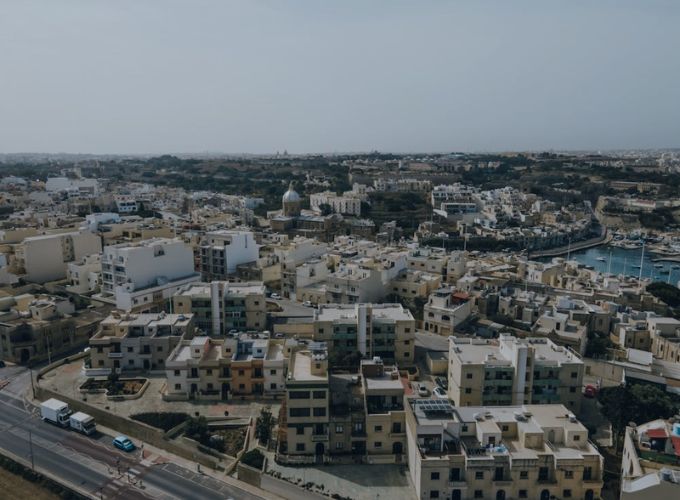


The land beneath Malta’s dwellings is now valued at €88.3 billion (2024), up from €4.7 billion in 1995, according to a new National Statistics Office study covering three decades of data. The research shows that land — not construction — has become the main driver of property value, with the gap widening markedly over time.
In the mid-1990s, the split between land and building value on a typical home was closer to 60/40 (land/construction). Today, construction accounts for just 17% of the combined value, with land taking the rest. The land share even peaked at 86% in 2021. In other words, where construction once carried substantial weight, location and land scarcity now dominate Malta’s housing market.
So how did NSO arrive at these figures? The paper uses what statisticians call the residual approach — plain-English version: start with the total market value of a property, estimate the value of the building on it (what it would cost to replace today, adjusted for age and wear), and whatever is left over is the value of the land. This method is widely used because sale prices for whole properties are readily available, while separate land prices usually aren’t.
Beyond the headline totals, the study maps how Malta’s market evolved. Townhouses contributed the highest total value from 1995 up to 2019, reflecting their deep presence in the stock and sustained demand. From around 2019, apartments and penthouses overtook them in total value — a shift tied to development patterns, changing preferences, and the expansion of the short-lets market. Maisonettes grew steadily across the period, while villas/farmhouses remained the smallest contributor overall, with a brief spike around the pandemic as buyers sought outdoor space.
The net capital stock (the value of the structures themselves) still grew — from roughly €3 billion in 1995 to over €14 billion in 2024 — driven by more dwellings, inflation in materials and labour, and regulatory changes. But land ran far ahead. The land-to-construction cost ratio rose from 155% in 1995 to 504% in 2024, peaking at 627% in 2020. That means land is now worth about five times the buildings sitting on it.
Cyclical shocks show up clearly. Land values accelerated in the early 2000s (peaking growth at 26% in 2004), slowed through the 2009–2012 financial crisis, surged again 2016–2019, cooled during COVID, then rebounded to +16% in 2024 as confidence and investment returned. Meanwhile, construction costs rose steadily, and from 2017 onward increased faster — partly due to pricier materials and labour, and the addition of new stock — but still couldn’t match the pace of land appreciation.
Methodologically, the NSO stitched together census data (2005, 2011, 2021), property price series and transaction datasets, and estimates of dwelling size (converting rooms into square metres using historical surveys). Where transactional detail was sparse (especially pre-2015), the series were interpolated and outliers treated cautiously. The office flags limitations — for example, gaps in older data and assumptions about building lifetimes (a 70-year service life was used) — but says the method is reproducible and fit for national-accounts use.
The takeaway is stark: land scarcity is doing the heavy lifting in Malta’s property valuations. Even as more homes are built and construction becomes pricier, the value uplift is overwhelmingly captured by land. For policymakers, that matters. Whether the debate is about affordability, rent pressures, regeneration, or land-use rules, this study shows the fulcrum of Malta’s housing economics sits under our feet — not in the bricks above.