



Artificial intelligence is already reshaping labour markets at a pace institutions are struggling to keep up with, with the potential for significant job disruption in the years ahead, according to warnings delivered at a European conference on the future of work.
Speaking at the TransFormWork 2 conference in Sofia, Alexei Dingli said a “job market catastrophe is on the way” if economies fail to adapt quickly enough to the scale of change being driven by artificial intelligence.
Dingli, who was attending the conference as part of the General Workers’ Union delegation, argued that the impact of AI is no longer theoretical, pointing to early signs of disruption already visible in the labour market.
He highlighted evidence showing that freelance white-collar earnings began declining shortly after the release of generative AI tools such as ChatGPT, signalling that cognitive and professional roles are now directly exposed.
“The effects are real and quite big,” he said, noting that generative AI represents a new class of technology capable of automating tasks that were previously considered safe from disruption.
Citing global projections, Dingli said millions of jobs are expected to be both created and lost over the coming years, but warned that the transition is unlikely to be balanced. Labour markets may struggle to absorb displaced workers quickly enough, particularly given the speed at which AI is being adopted.
He also pointed to the emergence of “agentic AI” — systems capable of making decisions and acting independently — as the next phase of disruption that could accelerate these trends further.
The discussion formed part of a panel chaired by Rachel Bondi Attard of The Malta Chamber of Commerce, Enterprise and Industry, who warned that Europe risks falling behind if it continues to focus on discussion rather than implementation.
“Dialogue is not enough,” she said, questioning whether policymakers are addressing outdated challenges while technological change advances rapidly elsewhere.
She called for a more immediate and coordinated response, including cutting bureaucratic barriers, setting clear implementation targets and integrating AI across sectors rather than treating it in isolation.
A broader labour market perspective was provided by Paweł Gmyrek of the International Labour Organization, who stressed that AI’s impact will be uneven.
According to Gmyrek, workers most exposed to AI are those in high-income, highly educated and cognitive roles, challenging the assumption that automation primarily affects lower-skilled jobs.
While AI is expected to boost productivity and economic output, he said employment outcomes will depend heavily on regulation, governance and how countries manage the transition.
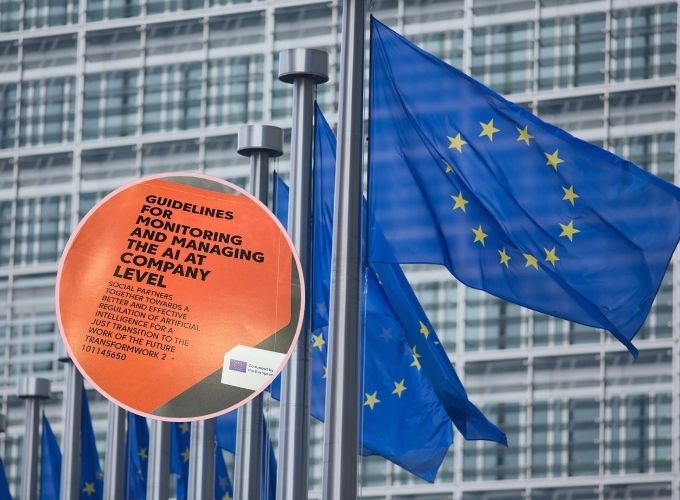
The panel took place as part of the TransFormWork 2 conference, where findings from the project’s final comparative report are being presented, focusing on how Europe can balance innovation with fair and inclusive labour outcomes.
You Might Also Like
Latest Article
‘Job Market Catastrophe Is On The Way,’ Maltese AI Expert Tells European Work Conference
Artificial intelligence is already reshaping labour markets at a pace institutions are struggling to keep up with, with the potential for significant job disruption in the years ahead, according to warnings delivered at a European conference on the future of work. Speaking at the TransFormWork 2 conference in Sofia, Alexei Dingli said a “job market … Continued
|
27 March 2026
Written by Yannick Pace
Europe Urged To Accelerate AI Regulation And Workforce Reskilling
|
27 March 2026
Written by Yannick Pace

Malta’s Deficit Nearly Doubled In 2025 As Spending Outpaces Revenue
|
27 March 2026
Written by Yannick Pace