


Some entrepreneurial journeys are defined by flash moments of inspiration. Others are shaped, patiently and relentlessly, by lived experience. The story of Ascent Software, and of its co-founder Joseph, belongs firmly in the latter camp.
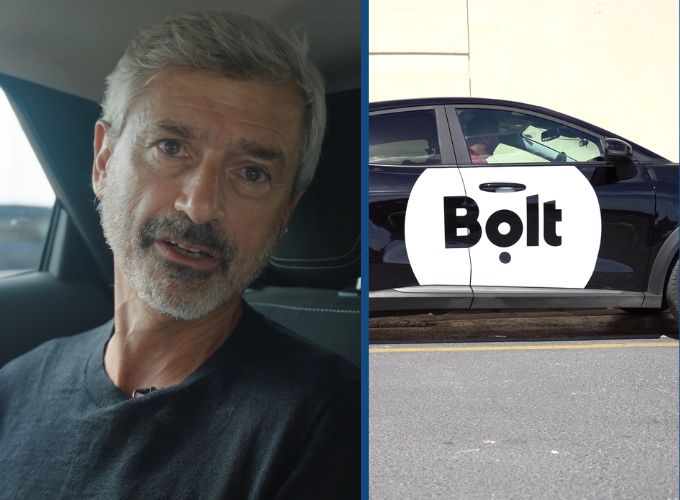
The inaugural episode of In the Driver’s Seat, a new MeetInc series launched in collaboration with Bolt Malta, takes viewers on a literal and figurative journey through the locations that shaped one of Malta’s most significant technology success stories. As the car winds its way across the island, so too does Joseph’s reflection on four decades of decisions, missteps, recalibration and ultimately scale.
From Early Work to First Failure
Joseph’s route into entrepreneurship was anything but conventional. Leaving school at 14, his early working life took him from manual labour to the UK tech scene, including a formative stint around Dolby’s early audio technologies in London. Those experiences instilled something rarely taught formally: an instinctive understanding of how technology meets real-world use.
His first ventures, by his own admission, were far from successful. But they were instructive. One early attempt to match jobseekers with employers failed commercially, yet planted a seed that would later re-emerge in a far more sophisticated form. “The idea was right,” he reflects, “but the execution wasn’t.”
The Birth of Process and Its Limits
The true foundation of Ascent was laid when Joseph partnered with technically-minded co-founders and mentors who brought structure to instinct. A defining mantra, you cannot control what you cannot measure, became embedded into the company’s DNA.
As Ascent evolved into software services, discipline became its competitive advantage. The company built a reputation for reliability and repeatability at a time when many software firms still operated informally. But Joseph is candid about the danger of over-optimisation. “Process protects you,” he notes, “until it doesn’t.” Knowing when structure becomes an inhibitor rather than an enabler proved to be one of the company’s most important leadership lessons.
The Client as a Partner, Not an Adversary
One pivotal moment came not in Malta, but in a UK boardroom. Facing a delayed project and a frustrated client, Joseph expected confrontation. Instead, he was met with an invitation to collaborate rather than defend. That encounter reshaped his approach to client relationships entirely. From that point on, Ascent treated its clients not as transactional buyers, but as long-term partners with shared outcomes. This shift would later enable the company to move upstream, taking ownership of larger, more complex projects across telecoms, automotive and enterprise systems.
Scaling Beyond the Island
By the early 2010s, Ascent had outgrown both its physical premises and its original operating model. The company expanded into Germany, the UK, the US and Eastern Europe, securing blue-chip clients such as Bosch while steadily professionalising its internal structure.
Yet scale brought new pressures. Payroll, leadership layers and geographic dispersion introduced complexity that tested even the most robust systems. “There’s a tipping point,” Joseph explains, “where creativity gives way to responsibility.” Navigating that transition required a recalibration of leadership, with revenue generation becoming the singular non-negotiable priority.
Private Equity and the Final Chapter
The final phase of Ascent’s journey began with the entry of UK-based private equity, followed by strategic acquisitions and further international expansion. By the time the business was sold in September, Ascent employed more than 550 people across five countries, generating tens of millions in annual revenue.
Crucially, the Maltese operation not only survived the transition, it thrived. Retained post-acquisition, the local team became a benchmark within a much larger global organisation, a point of pride for Joseph and a quiet endorsement of Malta’s technical talent.
Lessons for Founders at Every Stage
Joseph is wary of glamorising startups. He challenges founders who raise capital before validating demand, and advocates for failing fast when evidence suggests a concept lacks traction. His advice is pragmatic, sometimes uncomfortable, and rooted in lived experience: revenue matters; people matter more.
Above all, humility emerges as his defining principle. “You bring very little to the table on your own,” he says. “It’s the people around you that make a business work.” In the Driver’s Seat offers something rare in business storytelling: a grounded, unvarnished account of what it really takes to build and exit a global technology company from a small island.
To watch the full episode and discover more founder stories, visit MeetInc at meetinc.com.mt, to discover. connect. meet.