
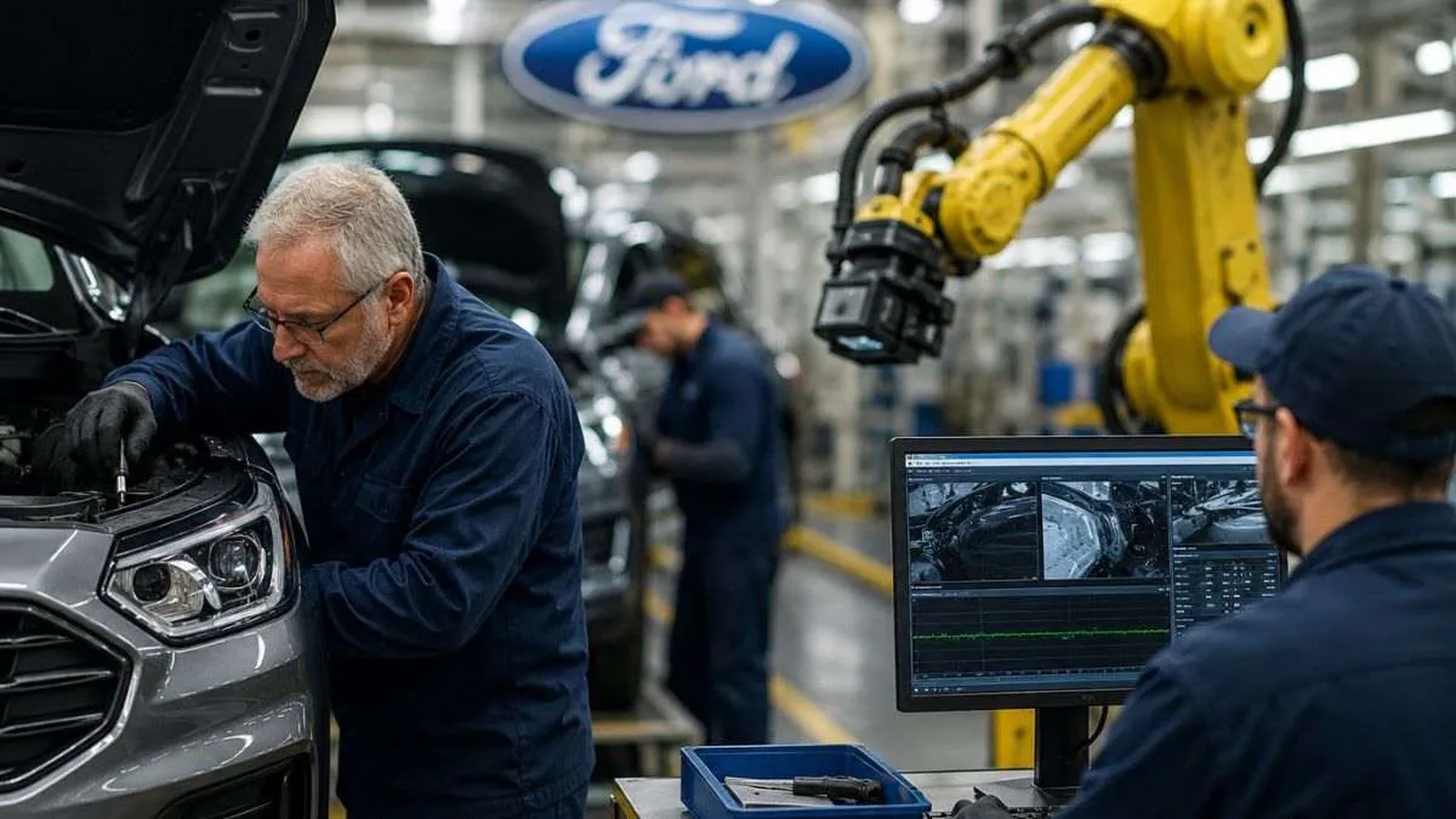


Ford has rehired over 300 human engineers after its artificial intelligence system failed to match their skills and experience. The US carmaker had adopted AI across some parts of its operations, including quality checks, in a bid to cut costs and boost productivity. However, executives have admitted that the technology fell short of expectations.
According to Charles Poon, vice president of vehicle hardware engineering, Ford didn't pay enough attention to the expertise of its most experienced engineers when training its AI system. "Artificial intelligence is a fantastic tool, but it's only as good as the information you use to train it," he said. The company has since reintroduced these human workers to train up its systems and mentor younger colleagues.
Ford's decision comes after the firm had touted the benefits of AI in increasing margins and improving efficiency. In an earnings call last October, chief operating officer Kumar Galhotra said the company was deploying AI across its entire industrial system. However, Poon acknowledged that the firm's reliance on automated tools had led to quality issues.
The admission marks a rare example of a major corporation revising its approach to AI after it failed to deliver as promised. Ford's executives have recognised the importance of human expertise in training and improving its technology. "We recognised that for us to enhance some of our automation and machine learning and artificial intelligence tools we needed to ensure that they were trained by the most experienced individuals," Poon said.
The company's decision to reintroduce human engineers has been welcomed as a pragmatic approach to AI adoption. Ford's quality checks have improved significantly, with the firm recently topping an industry benchmark for vehicle quality. The company's return to the top of the JD Power Initial Quality Study is seen as a testament to its renewed focus on human expertise and quality control.
Ford's reliance on AI had led to quality issues, but the reintroduction of human engineers has helped improve performance. Poon pointed out that automated tools lacked the training and expertise of veteran technicians, many of whom had left the company before their knowledge could be used to improve its tech. The company is now using these human workers to train up its systems and mentor younger colleagues.
Ford's admission of its AI failings comes as it celebrates its return to the top of an industry benchmark for vehicle quality. The company has said that reaching best-in-class quality required a significant talent refresh, which involved replacing senior leaders across engineering, supply chain and manufacturing, as well as hiring veteran engineers with decades of experience.
The move marks a shift in Ford's approach to AI adoption, with a renewed focus on human expertise and quality control. As Poon noted, "Artificial intelligence is a fantastic tool, but it's only as good as the information you use to train it."