
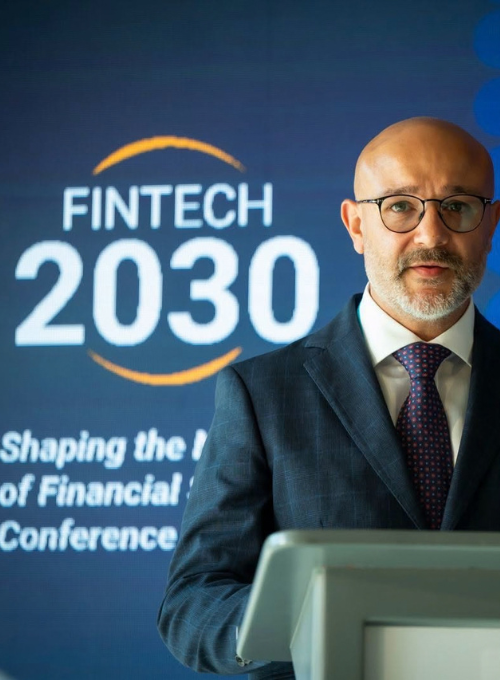


FinTech2030 moved into sharper territory as sessions turned to the technological risks that financial institutions and regulators will need to confront as innovation continues to outpace existing frameworks.
Alan Deceli, Head of Supervisory ICT Risk and Cybersecurity at the Malta Financial Services Authority, opened the segment with a discussion on emerging risks and the regulatory responses being developed to address them. The tone was forward-looking: less about what has already happened in financial technology and more about what is coming and whether the industry is genuinely ready for it.
A Frontier AI panel followed, moderated by Matthew Ben Hamed, Assistant Manager for Supervisory ICT Risk and Cybersecurity at the MFSA. Joining him were Neil Micallef, Manager for AI Supervision and Market Surveillance at the MDIA; Alberto Partida from the European Central Bank’s Cyber Risk Team and Prashast Baliga, Director of Strategic Security Advisory. According to an Instagram post covering the conference, the conversation centred on how frontier AI systems are reshaping the risk landscape for financial services and what supervisory frameworks need to look like in response.
The programme then shifted to quantum readiness, a subject that draws considerable attention in cybersecurity circles but remains relatively nascent in mainstream financial regulation. Noel Farrugia, Chief Technical Officer and Co-Founder of Merqury Cybersecurity Limited, moderated that session. His panel included Alessandro Curioni, IBM Fellow, Vice President for Europe and Africa and Director of the IBM Research Lab in Zurich; Moona Ederveen-Schneider, Founder of Resilia Connect and Jag Foo, Chief Security and Policy Officer at Safeheron. The discussion examined how quantum computing developments could undermine current encryption standards and what financial institutions should be doing now to prepare.
Across both sessions, the through-line was the same: anticipating risk before it crystallises, building resilience into systems rather than retrofitting it afterwards and ensuring that regulators and institutions are moving in step rather than in sequence. For a conference dedicated to the future of finance, the focus on what could go wrong felt as important as any conversation about what the technology can do.