
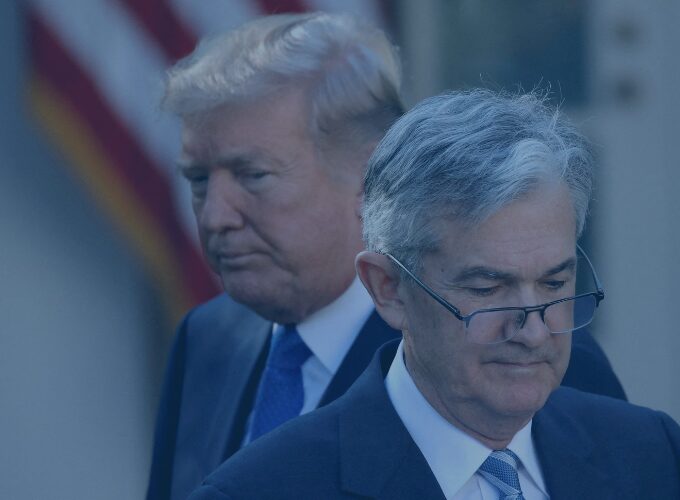


The Federal Reserve left its key short-term interest rate unchanged on Wednesday, resisting repeated calls from President Donald Trump to cut borrowing costs. The decision keeps the benchmark rate at about 4.3%, where it has been since the central bank made three cuts last year.
The move marks the fifth time this year the Fed has held rates steady and comes as Chair Jerome Powell warned that Trump’s sweeping tariffs are beginning to push up prices. Powell said it would take time to determine whether the resulting inflation would be temporary or longer-lasting.
“There is a risk that needs to be assessed and managed,” Powell said at a press conference following the decision.
The decision was not unanimous. Governors Christopher Waller and Michelle Bowman voted to lower rates, marking the first time in more than three decades that two Washington-based members of the Fed’s seven-person board have dissented. Governor Adriana Kugler was absent and did not vote.
\
The dissent underscores growing divisions within the central bank over the path for interest rates, particularly as Powell’s term as chair is set to expire in May 2026. Waller has been floated as a potential successor and has previously argued that growth and hiring are slowing enough to justify rate cuts.
Trump has intensified his criticism of Powell and the Fed, arguing that rates should be lowered to boost the economy. The White House has sought greater influence over the central bank, one of the few remaining independent federal agencies.
Powell pushed back, saying the majority of the committee agreed that with inflation still above the Fed’s 2% target and the job market broadly stable, rates should remain elevated for now.
The Fed’s latest decision came hours after government data showed the U.S. economy expanded at a 3% annual pace in the second quarter, a strong rebound following a 0.5% contraction in the first three months of the year. Economists now estimate average growth of about 1.2% for the first half of 2025.
Markets had anticipated the Fed might signal a cut at its next meeting in September, but Powell’s comments suggested there may not be enough data to support such a move. The central bank has three policy meetings remaining this year: in September, October, and December.
The Fed’s quarterly forecasts in June pointed to two potential cuts before year-end, though divisions within the committee could delay any action.
You Might Also Like

Latest Article
Malta To Allow 16-Year-Olds To Open Companies Under New ‘Youth Enterprise’ Legal Framework
Young people in Malta will soon be able to open their own companies from the age of 16 under a new legal framework announced by the government. The initiative, known as Intrapriża16, introduces a special type of company called a “Youth Enterprise”, allowing 16- and 17-year-olds to formally start and operate a business before they … Continued
|
13 March 2026
Written by MeetInc.

Epic Wins Malta’s Fastest Network Award At Mobile World Congress
|
13 March 2026
Written by MeetInc.

MeDirect Targets Return To Profitability After Ownership Change And 2025 Reset
|
12 March 2026
Written by MeetInc.