
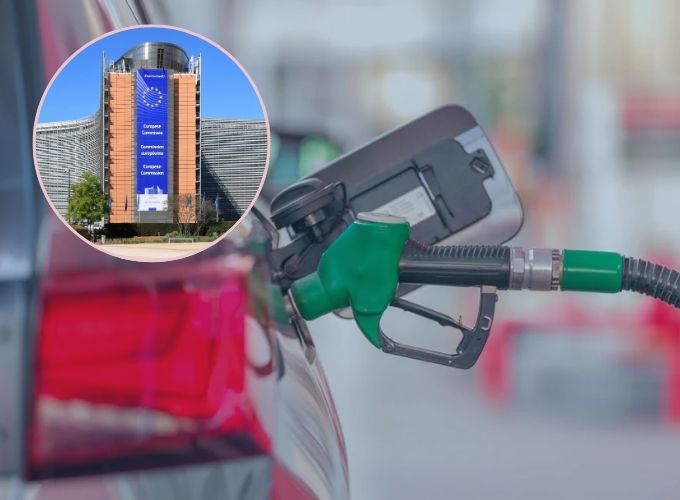


Europe’s biggest carmakers are warning that the EU’s landmark plan to phase out petrol and diesel cars by 2035 is no longer realistic.
In a joint letter to European Commission President Ursula von der Leyen, the heads of the EU’s top automotive lobby groups said new industrial and geopolitical hurdles make the target impossible to reach.
“Meeting CO₂ targets for 2030 and 2035 is, in today’s world, simply no longer feasible,” wrote Ola Källenius, President of the European Automobile Manufacturers’ Association and CEO of Mercedes-Benz, and Matthias Zink, President of the European Association of Automotive Suppliers and a senior executive at Schaeffler.
The letter argued that Europe’s climate policy for the auto sector must “move beyond idealism” and acknowledge real-world challenges — from China’s dominance of the electric vehicle (EV) supply chain to new US trade barriers.
The intervention marks a serious pushback from the continent’s most powerful manufacturing sector against one of Brussels’ flagship climate measures.
Automakers have invested heavily in electric models, but EVs still only make up about 15% of new car sales in Europe, with uptake uneven across member states. In the meantime, most of their profits still come from petrol and diesel models, particularly premium SUVs.
Suppliers are feeling the strain too: parts giant Continental has cut jobs, Valeo has issued profit warnings, and analysts expect more restructuring across the supply chain as financing costs rise and demand for EVs cools.
EU policymakers are holding their ground for now. The 2035 phase-out was approved after years of heated debate and is seen as critical to hitting Europe’s net-zero targets. France, the Netherlands and other countries have already aligned national policies with the ban.
Environmental groups argue that industry warnings are overblown, pointing to steady growth in EV sales and a wave of new European battery projects.
Still, the clash underscores a mounting tension: Europe’s desire to lead on climate action versus the economic realities of an auto sector struggling to keep pace with global competition.