


The European Commission is facing growing backlash over its new trade deal with the United States, which introduces a 15% blanket tariff on most EU exports while allowing the majority of US products to enter the European market with zero or near-zero duties.
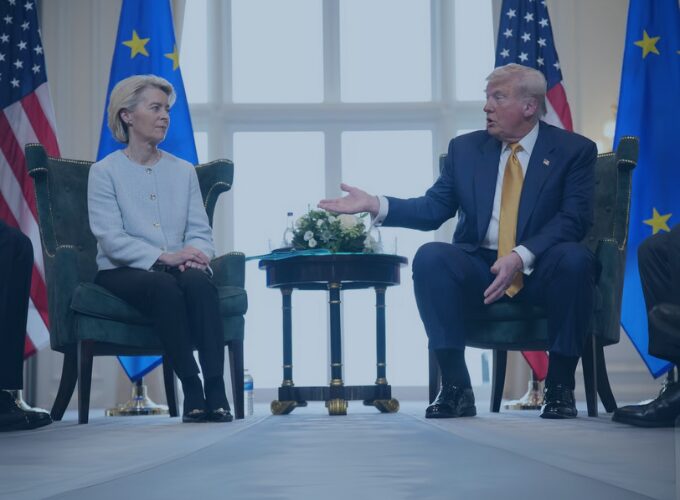
Framed by Brussels as a necessary step to avoid a destructive trade war, the agreement was finalised following direct negotiations between Commission President Ursula von der Leyen and US President Donald Trump. However, critics across Europe say the deal is lopsided and favours American interests at the expense of European industry.
“This is clearly the best deal we could get under very difficult circumstances,” said European Trade Commissioner Maroš Šefčovič at a press conference on Monday, noting that Trump had initially demanded a 30% tariff – a move Brussels feared would grind transatlantic trade to a halt. The 15% rate, described as “all inclusive”, is meant to prevent further duties from accumulating and to provide a degree of certainty for exporters.
Still, many in the European Parliament and national capitals see it as a poor outcome. Bernd Lange, chair of the Parliament’s Trade Committee, called it “not satisfactory” and “difficult to accept”, while Green MEP Terry Reintke accused the Commission of surrendering to “bullying tactics and threats” from Washington.
Beyond the tariff discrepancy, the deal includes pledges from the EU to channel $700 billion in energy spending and $600 billion in broader investments into the US economy over the remainder of Trump’s second term – commitments that are not legally binding but have reinforced perceptions of an unbalanced arrangement.
The reaction from national leaders has also been tepid. Belgian Prime Minister Bart de Wever said the deal offered “relief but not celebration”. Spanish Prime Minister Pedro Sánchez offered his backing but admitted to doing so “without any kind of enthusiasm”. France’s prime minister went further, calling the agreement a “dark day” of “submission”.
Critics say the average tariff on EU goods has now jumped from 4.8% to 15%, while the US has preserved preferential access to European markets. Even the European People’s Party, von der Leyen’s own political family, labelled the deal a “blatant breach” of WTO rules.
Šefčovič defended the compromise by pointing to the wider geopolitical context. “It’s not only about the trade. It is about security. It is about Ukraine. It is about current geopolitical volatility,” he said. “And I believe that the strategic cooperation with our strategic partner is a better outcome than an all-out trade war.”
Commission insiders admit the result is “not great”, but hope the 15% tariff will be treated as a ceiling, not a starting point, by Washington. Yet experts remain sceptical.
The deal is expected to come into force later this year, pending formal ratification.