
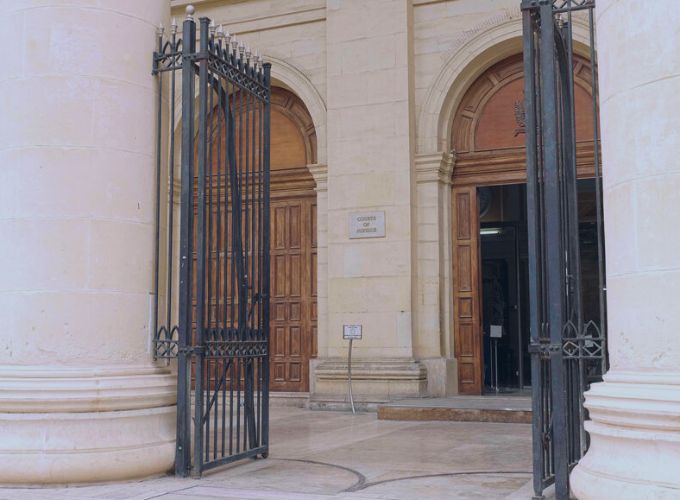


A landmark judgment delivered this morning by the First Hall of the Civil Court (Constitutional Jurisdiction) has confirmed that the legal framework governing the Kamra tal-Periti’s disciplinary procedures does not breach the right to a fair hearing. The ruling, issued by Justice Henri Mizzi, provides important clarity on the regulatory process governing Malta’s professional architects and civil engineers.
The case arose following a constitutional reference request filed earlier this year by periti Roderick Camilleri and Anthony Mangion, who are appealing the Kamra tal-Periti (KTP) Council’s earlier decision to suspend their warrant. The suspension was linked to professional shortcomings identified after the tragic 2020 building collapse that claimed the life of Miriam Pace.
The appellants raised several constitutional concerns, most notably alleging a lack of impartiality within the KTP’s disciplinary structure. Their argument centred on the Council’s dual role: conducting preliminary investigations and then issuing disciplinary determinations. They argued this structure could infringe Article 39 of the Constitution and Article 6 of the European Convention on Human Rights, both of which safeguard the right to a fair and impartial hearing.
In its decision, the Court acknowledged that this overlap, assessed in isolation, could indeed appear problematic. However, it emphasised that Malta’s disciplinary system must be evaluated in its entirety. Central to this, the Court noted, is the unrestricted right of appeal available to periti before the Court of Appeal — a safeguard that ensures full procedural fairness and ultimately satisfies constitutional and convention standards.
The Kamra tal-Periti welcomed the judgment, describing it as an important affirmation of the robustness of its regulatory framework. The Kamra said it will continue strengthening its disciplinary and oversight functions in the coming months, supported by the resources allocated in the latest national budget and through collaborations with public and private bodies.
It also reiterated the broader significance of the Court’s position: ensuring that professional bodies entrusted with self-regulation operate effectively and independently, without political interference, in order to safeguard both public interest and professional integrity.
The Kamra was represented in these proceedings by Dr Joseph Mizzi and Dr Ylenia Busuttil of Muscat Mizzi Advocates. The decision remains subject to appeal.