



MeetInc.
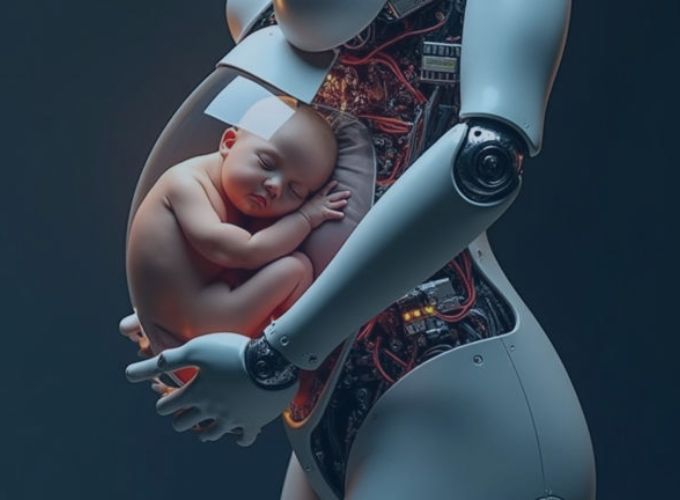
A Chinese company has unveiled one of the boldest – and most controversial – visions in the history of reproductive technology: a humanoid robot designed to carry a baby to full term.
Kaiwa Technology, based in Guangzhou, announced its plans at the 2025 World Robot Conference in Beijing. Founder Zhang Qifeng, who is also affiliated with Nanyang Technological University, described the project as “the world’s first humanoid pregnancy robot,” equipped with an artificial womb inside its abdomen. The humanoid is designed not just as a machine, but as a life-sized “surrogate,” capable of carrying out the full process from conception to delivery.
According to Chinese media reports, Kaiwa expects to debut a prototype as early as next year, with the robot priced below 100,000 yuan (around €13,000). At the core of the idea lies artificial womb technology – a system in which a fetus develops in artificial amniotic fluid and is supplied nutrients through a tube connected to the umbilical cord. The approach has already shown promise in laboratories. In 2017, US researchers successfully grew a premature lamb in a “biobag” filled with synthetic fluid, allowing it to develop wool within weeks. Until now, such experiments have worked only as neonatal incubators, supporting babies born very prematurely. For Kaiwa’s robot to function as envisioned, the system would need to sustain fertilisation, implantation, and full-term pregnancy – steps that remain unproven.
The announcement has triggered fierce debate. Supporters say the technology could offer hope for infertile couples, women unable to safely carry a pregnancy, and even reduce health risks linked to childbirth. Critics warn it could open the door to “outsourced pregnancy” on a mass scale, commodifying reproduction and raising profound ethical and legal dilemmas. Zhang acknowledged the challenges, saying discussions with provincial authorities in Guangdong are already under way to explore legal frameworks for artificial wombs and humanoid pregnancy robots.
The pregnancy robot was not the only headline-grabber at the World Robot Conference. Researchers also unveiled GEAIR, the world’s first AI-powered breeding robot for agriculture. Developed by the Chinese Academy of Sciences, GEAIR can autonomously pollinate, crossbreed, and accelerate crop cycles using gene editing and robotics.
Together, these innovations illustrate how China is positioning itself at the forefront of biotechnology and robotics – not only reshaping food production, but potentially human reproduction itself. Still, the biggest question hangs in the air: can a humanoid really replace the human womb? Until a working prototype proves otherwise, Kaiwa’s vision sits somewhere between radical science and speculative fiction.
You Might Also Like

Latest Article
More Than 90% Of Firms Backed By Malta Development Bank Are SMEs
More than 90% of the businesses supported by the Malta Development Bank since its launch are small and medium-sized enterprises, according to Chief Executive Officer Alison Micallef. Speaking in an interview with The Malta Independent, Micallef said the bank has assisted around 750 firms over the past eight years, with the overwhelming majority being SMEs. … Continued
|
23 March 2026
Written by MeetInc.

Government Debt Rises By €0.5bn To €11.4bn As Revenue Surges
|
20 March 2026
Written by MeetInc.

MIDI To Receive €43M As Manoel Island Concession To Be Rescinded
|
17 March 2026
Written by MeetInc.


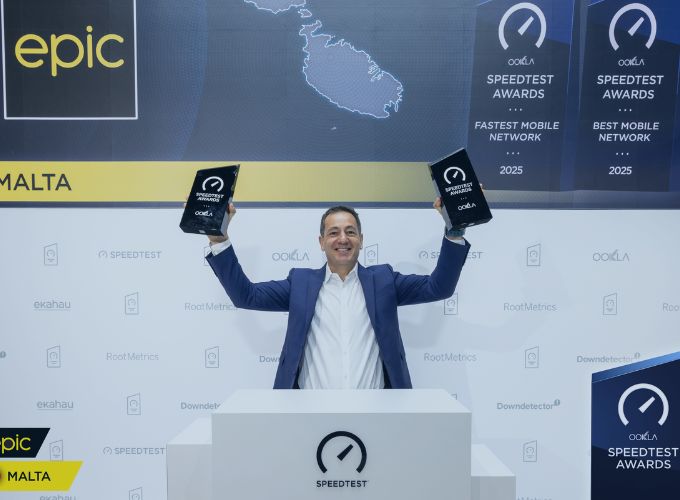
Epic Wins Malta’s Fastest Network Award At Mobile World Congress
|
13 March 2026
Written by MeetInc.