

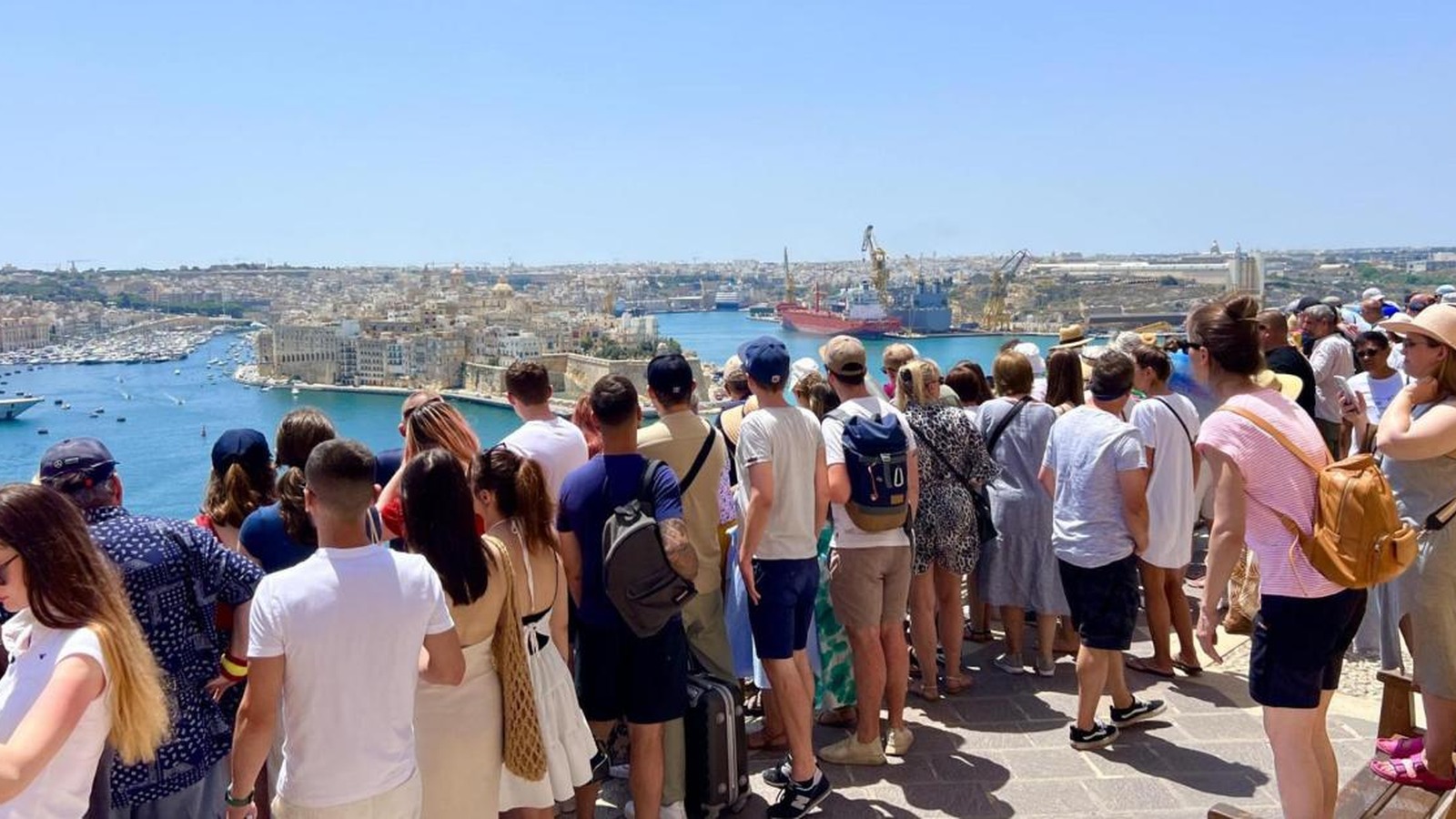


Malta's National Statistics Office says tourism added an average of 50,767 people to the islands' mid-year resident population in 2025, lifting the effective population to 632,011. The figures, published on 15 October 2026 in release NR 182/2026, show that once visitors are counted alongside the usually resident population of 581,244, the number of people physically present on the islands climbs sharply across the year.
Tourism intensity, which the NSO defines as the ratio of nights spent in all forms of tourist accommodation per 100 residents per day, rose to 8.7 in 2025 from 8.2 the year before. In plain terms, that is roughly nine tourists for every 100 residents, one more than in 2024.
Seasonality drives the sharpest swings. The effective population peaked at 671,576 in August, when an additional 90,332 tourists were present on an average day, and bottomed out at 594,428 in December, with just 13,184 tourists. The gap between the busiest and quietest months came to 77,148 people, or 13 per cent. Tourism intensity tracked the same curve, hitting 15.5 in August against 2.3 in December.
The load is not shared evenly. At district level, the Northern district recorded the highest annual intensity at 15.3, just ahead of the Northern Harbour district on 14.6, even though Northern Harbour carries the largest resident and tourist numbers in absolute terms.
The locality picture is starker. San Ġiljan posted the highest annual intensity at 82.9 tourists per 100 residents, followed by Valletta on 80.5. Valletta recorded the steepest annual rise, up from 69.9, equal to 11 more tourists per 100 residents than a year earlier. At the August peak, San Ġiljan's intensity reached 143.0, meaning 143 tourists for every 100 residents, up 16.5 on 2024, with Valletta next on 98.5.
The NSO also measured the effect on population density. The resident mid-year density of 1,845 people per square kilometre rose to 2,006 once the average annual tourist population was added. In Tas-Sliema, resident density of 17,703 per square kilometre climbed to 25,268 with visitors counted, while Il-Gżira saw the largest absolute increase at 3,809 people per square kilometre.
The office noted that tourist population estimates for 2023 and 2024 have been revised, which affects earlier intensity and effective population figures. No harmonised Eurostat counterpart exists for the measure, so no EU-wide comparison is offered.