
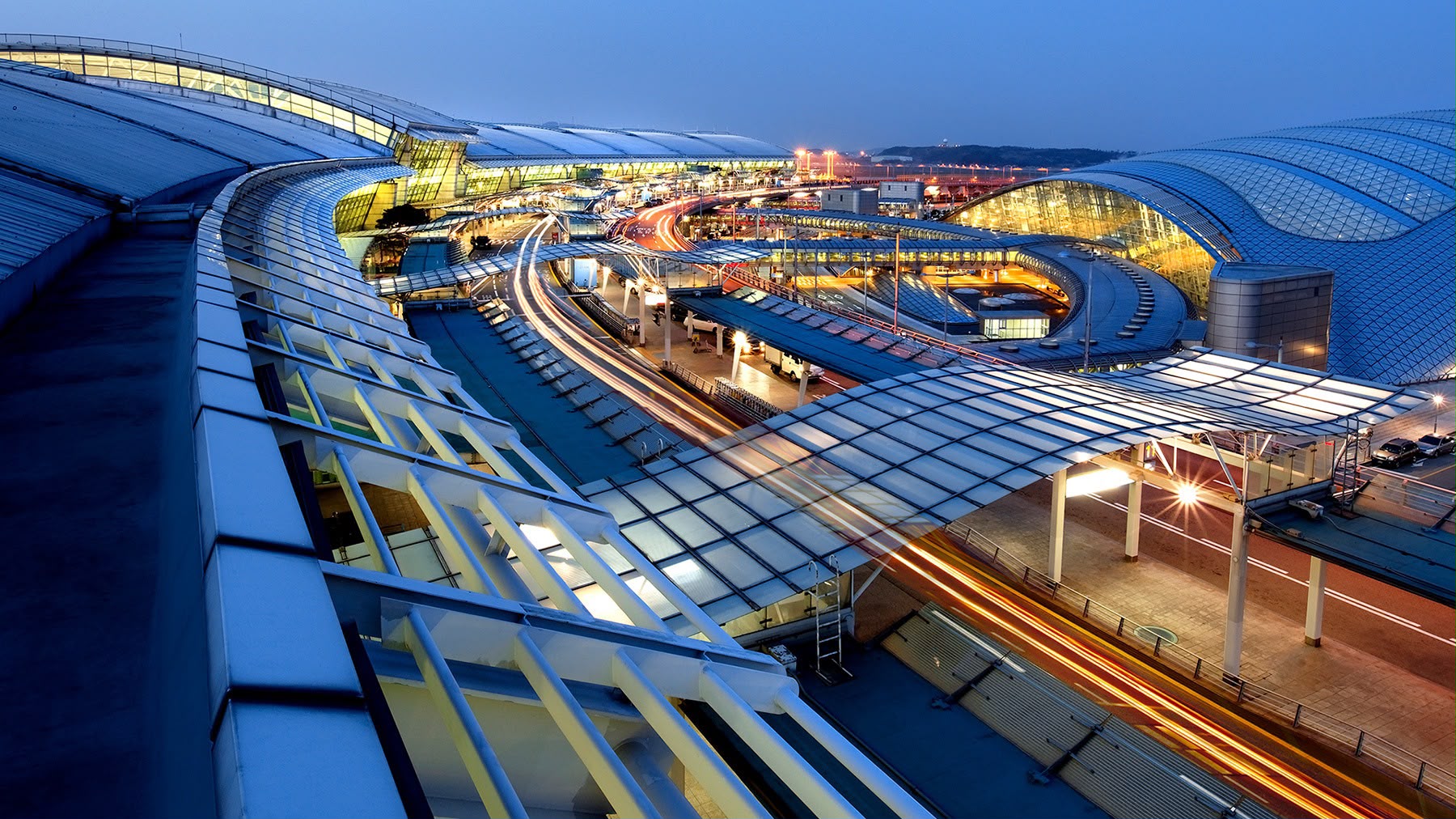


Seoul’s Incheon Airport has overtaken London Heathrow and Singapore Changi to become the world’s busiest international passenger hub, reaching the top spot just 25 years after opening its doors.
Preliminary data covering 1,234 airports, compiled by Airports Council International, showed Incheon handled 38.39 million international passengers in the first half of 2026. Heathrow came second with 37.79 million, followed by Changi on 34.53 million. Dubai Airport, which had long traded the top position with Heathrow, is expected to drop outside the top five entirely.
Incheon’s ascent has been steady rather than sudden. The airport ranked tenth globally in 2002, climbed to fifth by 2018 and reached third in 2024. The leap to first also coincided with Incheon surpassing one billion cumulative passengers, a milestone achieved faster than any other major international airport.
Geopolitics did a fair amount of the work. The conflict between the United States and Iran disrupted transfer traffic through Middle Eastern hubs, redirecting travellers towards Incheon instead. Transfer passenger numbers rose 18.1 per cent year on year to 4.24 million, with European transfer traffic climbing a striking 63.2 per cent.
Inbound tourism added further momentum. Chinese and Japanese visitors led a surge in foreign arrivals, with international travellers accounting for 44.4 per cent of overall passenger traffic at Incheon in the second quarter, a record share and up from 39.5 per cent a year earlier.
Underpinning the growth is a four-phase expansion finalised in November 2024, which raised annual international capacity to 106 million passengers, the third largest in the world behind Hong Kong and Dubai. Incheon now connects 183 cities across 53 countries via 101 carriers, ahead of Hong Kong’s 139 cities, Shanghai Pudong’s 92 and Narita’s 86.
Incheon International Airport Corporation noted that the new ranking, combined with 12 consecutive years as the top-rated airport for service quality, cements its position as a genuine global hub. The corporation is investing in artificial intelligence and urban air mobility infrastructure, aligned with South Korea’s goal of attracting 30 million inbound tourists annually.
Acting President Kim Beom-ho expressed gratitude to the government, the public and airport staff and indicated that the corporation would stay focused on core operations while expanding regional connectivity to support broader growth across South Korea’s aviation sector.