

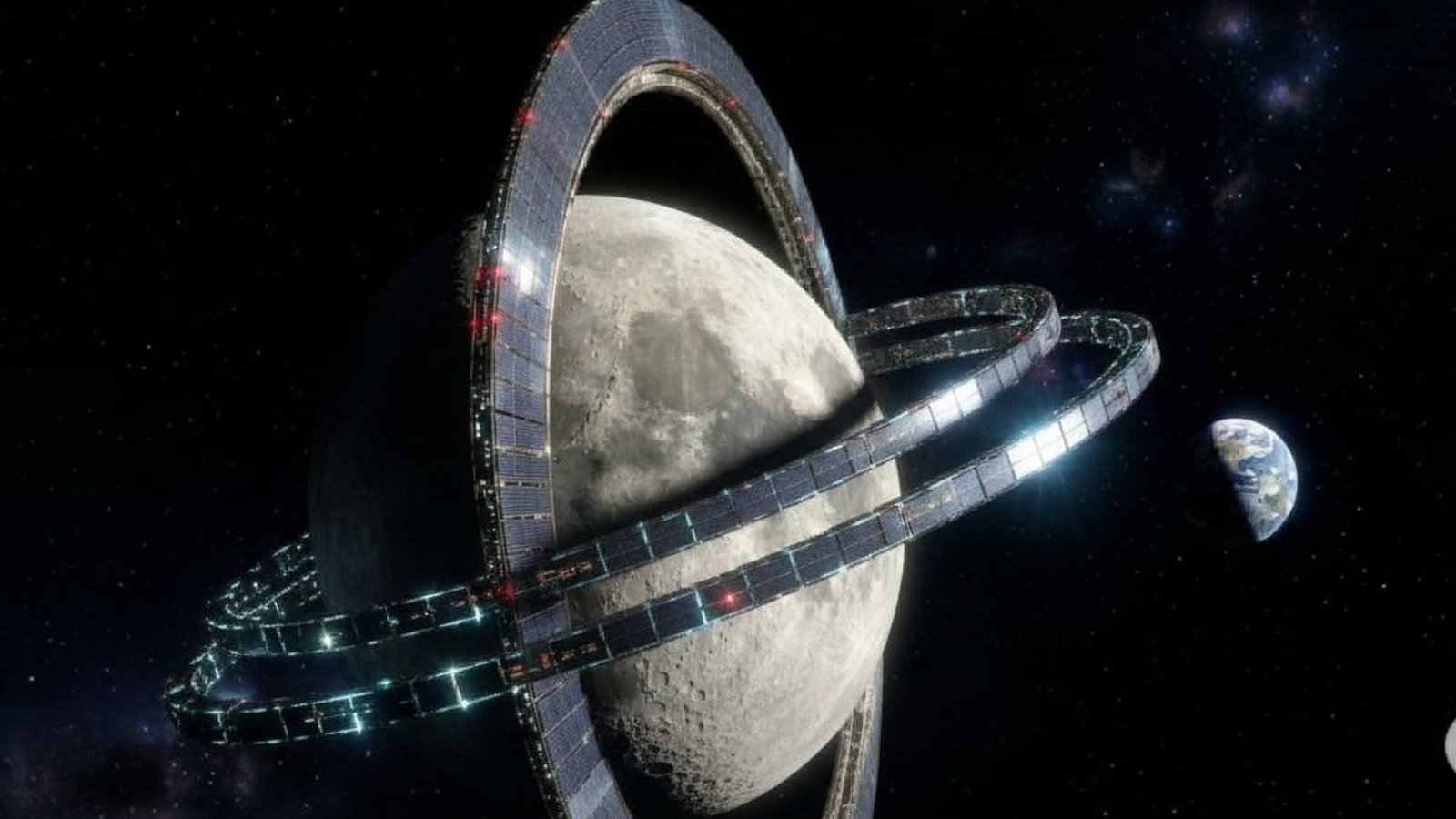


Japan's Shimizu Corporation has proposed the "Luna Ring", a conceptual 11,000-kilometer belt of solar panels around the Moon's equator. This ambitious project aims to harness the power of the Sun to generate clean energy for Earth, with the potential to produce 24/7 electricity on a massive scale.
The concept involves converting solar energy into laser/microwave beams that can be transmitted back to Earth. Proponents argue this technology could provide a reliable and constant source of renewable energy, mitigating the intermittency often associated with solar power on our planet. The project's proponents claim it has the potential to revolutionise the way we generate electricity.
Shimizu Corporation is one of Japan's leading construction companies, with a long history of delivering large-scale infrastructure projects. If realised, the Luna Ring would be an unprecedented undertaking, requiring significant investment and technological advancements. While no official timeline has been announced, the company suggests that construction could potentially begin as early as 2035.
The scale of the project is staggering, with solar panels stretching across nearly a quarter of the Moon's circumference. To put this into perspective, the entire distance from London to New York is approximately 4,500 miles – the Luna Ring would be equivalent to over two and a half times that length.
While the Luna Ring remains in its conceptual phase, it has already generated significant interest among experts and policymakers. As the world continues to grapple with the challenges of climate change and energy sustainability, innovative solutions like this one are increasingly being explored. The success of the project would depend on various factors, including technological feasibility, cost-effectiveness, and regulatory frameworks.
The Luna Ring represents a bold step towards a cleaner, more sustainable future for our planet. If successful, it could provide a significant boost to global energy production, helping to mitigate the impact of climate change.