



Malta’s tuna fattening industry wields an outsized influence on global seafood markets, with new EU data showing that a slowdown in Japan’s spending on tuna imports from Malta played a direct role in a 5% drop in the total value of all fish and seafood imported by Japan worldwide in 2024.
The figures come from The EU Fish Market (2025 edition), published by the European Market Observatory for Fisheries and Aquaculture Products (EUMOFA). According to the report, Japan imported 2.3 million tonnes of fishery and aquaculture products worth €12.2 billion in 2024. While import volumes rose by 1% compared to 2023, the total value of those imports fell sharply.
“A drop in the values of imported salmon roe products from Russia and the US, and of tuna from Malta and Thailand, caused the overall decrease in the value of imports,” the report states.
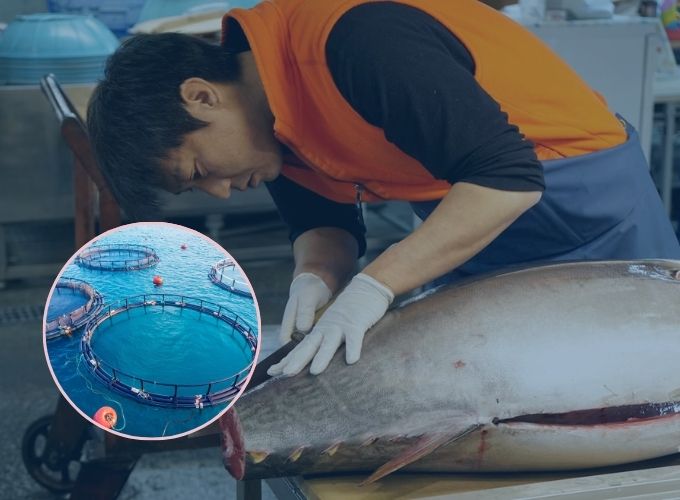
Malta’s role in this shift is particularly striking. Around 90% of the country’s bluefin tuna production is exported to Japan, making Malta one of the most important suppliers to the world’s largest high-end tuna market. As a result, changes in pricing or purchasing volumes from Malta alone can move Japan’s national import figures — and, by extension, global seafood trade data.
This dependence reflects the structure of Malta’s aquaculture sector, which is heavily concentrated on the fattening of high-value bluefin tuna. Over the decade leading up to 2023, that specialisation drove rapid expansion. The volume of bluefin tuna produced in Malta surged by 242%, while the value increased by 77%. By 2023, production reached 18,624 tonnes with a market value of €167 million.
However, the sector remains highly volatile. While total aquaculture output by volume rose by 15% in 2023 to around 21,000 tonnes, total sector revenue fell by 38% compared to the previous year. Price swings, changing international demand and high operating costs have made earnings increasingly unpredictable.
That volatility continued into 2024, though with a notable twist. While the overall value of aquaculture output declined further, profitability improved significantly as input costs — particularly feed and live tuna purchases — fell sharply. Gross value added in the sector swung from a large loss in 2023 to a positive contribution in 2024, highlighting how sensitive the industry is to global price movements.
Malta’s trade data reflects this concentration risk. In 2024, seafood exports outside the EU fell by 21% in volume, yet export revenues declined by just 0.3%, remaining above €170 million. High unit values continue to offset falling volumes, at least for now.
Domestic consumption figures are harder to interpret. Although per-capita fish consumption appears high, EUMOFA notes that Malta’s data is distorted by tourism and by the large volumes of imported frozen fish used as feed for the tuna industry rather than for human consumption.
With Japanese demand softening, Maltese producers have begun exploring alternative Asian markets, including China, to reduce reliance on a single export destination. The latest figures underline a central reality: Malta’s tuna industry is not small — but it is highly exposed. When demand shifts, the effects are felt far beyond the island’s shores.