

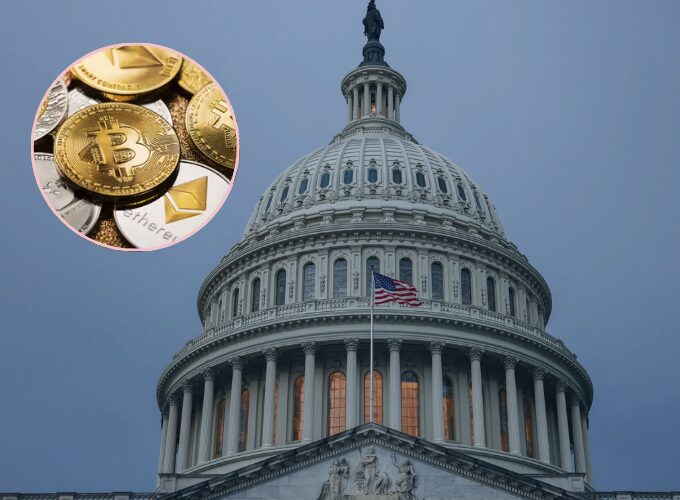


The US crypto industry secured a major victory on Thursday as Congress passed the first federal law regulating stablecoins, sending the legislation to President Trump’s desk with broad bipartisan support.
Backed by Republicans and championed by Trump, the bill introduces federal and state oversight for dollar-linked stablecoins — digital tokens designed to maintain a fixed value. Supporters say the new rules will unlock faster, cheaper payments and boost confidence in a market that could grow from $265 billion today to $3.7 trillion by 2030, according to Citigroup.
The bill is the centrepiece of what Trump has dubbed “Crypto Week”, a broader legislative push to legitimise digital assets. It passed the House 308-122 after clearing the Senate and marks a political milestone for the crypto world, which has rebounded sharply from the 2022 collapse of FTX.
The new rules require stablecoin issuers to hold fully backed dollar reserves in short-term government debt or similar instruments. That clarity is expected to benefit firms like Circle, issuer of USDC, which rallied earlier this week along with Coinbase, its key partner.
Critics, including Elizabeth Warren and Maxine Waters, argue the law lacks strong consumer protections and could lead to calls for government bailouts if a major issuer fails. But big banks are already taking the threat seriously. JPMorgan, Bank of America and Citigroup executives have all acknowledged the growing risk stablecoins pose to traditional banking dominance in the payments space.
Trump and his family have financial interests in digital assets, including a platform that issues both a token and a stablecoin. Some Democrats attempted to add a ban on public officials profiting from such ventures, but the amendment failed.
The law is expected to supercharge stablecoin adoption — and further blur the line between traditional finance and crypto.