


Yannick Pace
Gamers across Europe, Australia and Japan are facing higher console prices — not because of flashy new features, but because of shifting global economics.
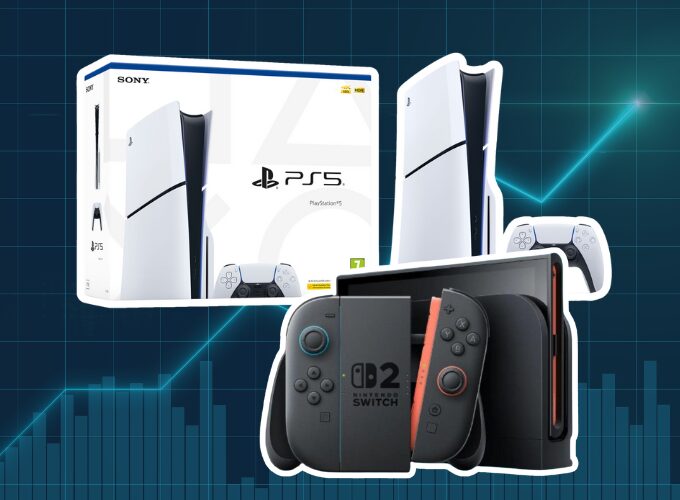
Sony has announced price hikes for the PlayStation 5 in several markets, raising the cost of both the digital and standard editions. In the UK, the PS5 Digital Edition now costs £389.99, while the disc version is up to £479.99 — a £20 jump. Across the Eurozone, prices now sit at €449.99 and €549.99 respectively. Similar increases have rolled out in Australia and New Zealand.
While Sony hasn’t provided detailed reasoning, the move comes as rising inflation, currency volatility, and ongoing trade tensions — especially between the US and China — continue to disrupt the global tech market. These pressures are increasing the cost of manufacturing, importing and selling hardware abroad.
And Sony isn’t alone. With Nintendo expected to launch the long-awaited Switch 2 later this year, attention is now turning to how much it will cost — and how that pricing will differ outside the US. Even if Nintendo maintains a $399 or $449 price tag in America, consumers in the UK, EU and Japan may face noticeably higher local prices due to exchange rate shifts and rising import costs.
The Japanese yen has hit historic lows against the dollar, and the euro and pound have also weakened — meaning companies must either raise prices or take a financial hit. Unlike in past console cycles, where favourable exchange rates often helped European and Japanese gamers, this time the strong dollar is flipping the script.
The result is a subtle but significant shift: consoles that traditionally became more affordable over time are now getting more expensive. And new consoles, like the Switch 2, may launch into a global economy where price parity is harder to maintain.
The impact of trade tensions can be felt beyond just exchange rates. Higher tariffs, fragmented supply chains and rising production costs are all squeezing the margins of hardware makers. Even giants like Sony and Nintendo can’t fully shield international buyers from those effects.
Sony’s timing may also be strategic. With a PS5 Pro widely expected later this year, the company may be preparing the market for a higher-end model by nudging current prices upward now.
Nintendo, meanwhile, is in a tight spot. The original Switch became a global hit in part thanks to its accessible $299 price point. But launching its successor at a premium — even if justified by the tech or exchange rate — could test buyers’ patience in weaker economies.
For consumers, the message is clear: whether you’re picking up a PS5 now or holding out for the Switch 2 later this year, expect to pay more. And that’s not just about supply or demand — it’s the price of navigating a more fractured, trade-warped world.