

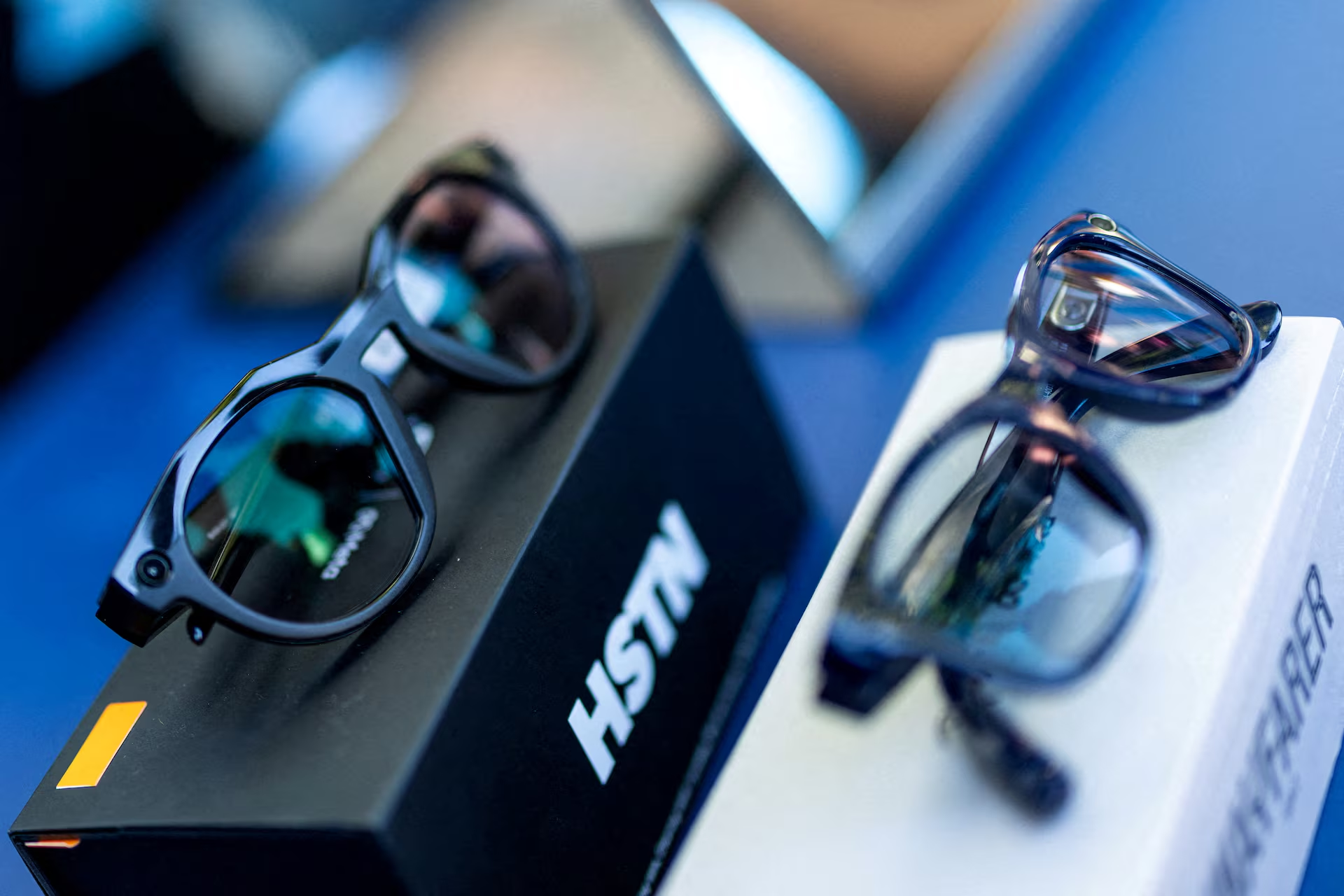


Norway has moved to become the first major country to propose a temporary ban on AI glasses in public spaces, citing growing concern over the capacity of wearable technology to record people without their knowledge or consent.
The country’s centre-left government announced on Monday that it plans to introduce legislation to parliament covering a temporary prohibition in locations including parks, beaches, schools and kindergartens. Alongside the ban, authorities intend to establish a dedicated expert group to develop permanent national rules on the technology.
The proposal in the context of a broader international debate over how governments should respond to the rapid spread of AI glasses, including devices made by Meta and a growing range of cheaper alternatives. The concern is not purely theoretical: the glasses have attracted criticism for enabling covert filming, with particular alarm focused on incidents involving children and women in sensitive settings such as changing rooms.
Norway’s digitalisation minister, Torgeir Micaelsen, framed the proposed pause as a way of creating space for proper deliberation before lasting rules are set. He expressed concern that people risked being photographed, filmed or recorded without their awareness and argued that a temporary measure would allow time for thorough assessment and an informed public debate capable of laying the groundwork for permanent regulation. He also warned against normalising a society in which people felt under unseen surveillance in places where they expected privacy, suggesting this could ultimately lead people to withdraw from public life.
Parts of Norwegian society have already moved independently. Schools in Oslo and Equinor, the country’s largest company, have each introduced their own bans covering offices and offshore facilities.
Norway is not alone in wrestling with the question. Australia is reported to be considering restrictions on smart glasses in certain public spaces and courtrooms in several countries have already issued prohibitions.
For the technology industry, the stakes are considerable. Companies including Meta, Google and OpenAI have positioned smart glasses as potentially the next dominant interface for AI, envisioning a future in which conversational AI replaces the mobile phone as the primary point of access. Analysts at Counterpoint Research estimate that consumers will spend more than one trillion dollars on wearable devices between 2026 and 2032. Whether governments will allow that market to develop without meaningful constraint is, increasingly an open question.