

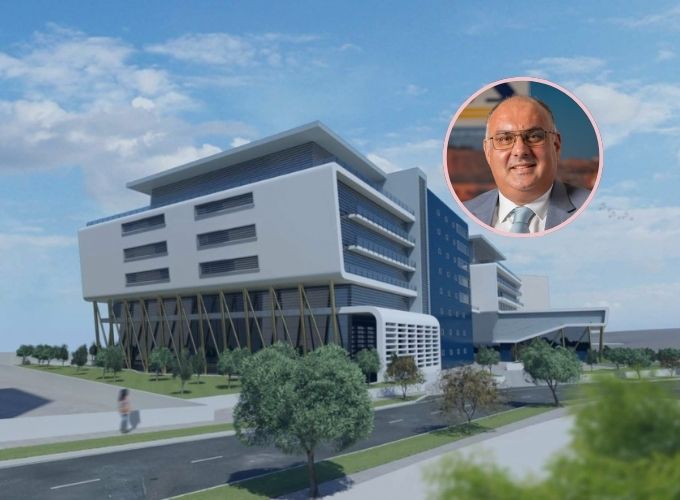
The Institute of Tourism Studies (ITS) is targeting 2029 for the opening of its new Smart City campus, a project that is expected to significantly expand the institute’s capacity and training facilities.
The new campus will increase ITS’s student capacity from around 1,000 to approximately 2,500 students, reflecting growing demand for tourism and hospitality education in Malta.
Speaking in an interview with The Malta Independent, ITS Chief Executive Officer Pierre Fenech said excavation works on the Smart City site have already been completed while the institute continues operating from its temporary location at the aviation park in Luqa.
ITS relocated to Luqa after its former campus in Pembroke was transferred to developers for the construction of a large mixed-use project by the db Group.
According to Fenech, several changes were made to the original Smart City campus plans. One major adjustment was the removal of a hotel component initially envisioned as part of the project.
Instead, the new campus will include around 500 dormitory beds, allowing students to stay on site while continuing to use Malta’s hospitality industry for practical training placements.
Sustainability considerations also influenced the design. Fenech said the institute worked to reduce the building’s carbon footprint, noting that ITS already offers specialised courses focused on climate-friendly travel.
The Smart City campus will introduce several new training facilities and academic programmes. Among the most distinctive features is an 18-metre-deep diving pool, intended to support ITS’s Bachelor of Science degree in Diving Safety Management, which the institute describes as the first programme of its kind.
The campus will also include four training restaurants operated by students, expanding on the three currently run by the institute. One of the additional outlets will focus on café-style and fast-food service training.
Other planned facilities include a spa training centre, indoor sports complex and a water polo-sized swimming pool that could also be made available to the surrounding community.
Fenech acknowledged that the Smart City location has raised concerns about accessibility, but said upcoming infrastructure projects could improve connectivity.
These include road works linking Kalkara to Xgħajra and proposals for sea transport connections to Marsaskala. Shuttle bus services are also expected to link nearby transport nodes to the campus.
You Might Also Like
Latest Article
ITS Smart City Campus Targeted To Open In 2029, CEO Says
The Institute of Tourism Studies (ITS) is targeting 2029 for the opening of its new Smart City campus, a project that is expected to significantly expand the institute’s capacity and training facilities. The new campus will increase ITS’s student capacity from around 1,000 to approximately 2,500 students, reflecting growing demand for tourism and hospitality education … Continued
|
9 March 2026
Written by MeetInc.
CrediaBank Profit Surges As Bank Prepares For HSBC Malta Takeover
|
6 March 2026
Written by MeetInc.

NYSE Owner Backs MFSA-Licensed Crypto Exchange In $25bn Deal
|
5 March 2026
Written by MeetInc.