

Maltese respondents emerge as the most open in the European Union to the use of artificial intelligence in education, according to a new Eurobarometer survey examining future needs in digital education.
The Flash Eurobarometer survey shows that only 11% of people in Malta believe AI does not belong in the classroom, the lowest level of resistance recorded across all EU member states. This places Malta ahead of countries such as Estonia, where 12% oppose classroom AI use, while opposition rises sharply elsewhere, reaching 28% in France and 27% in Ireland. The EU average for those rejecting AI in education stands at 22%.
Public opinion in Malta is not blindly enthusiastic, but notably pragmatic. When asked about their position on AI in education, 39% of Maltese respondents said AI can improve teaching and learning and that the education community should not be afraid to experiment with it. A further 47% believe AI can bring both benefits and risks, arguing that schools should explore its use carefully rather than reject it outright. Combined, this places Malta at the top of the EU in terms of willingness to engage constructively with AI in education.
This openness extends beyond artificial intelligence alone and reflects a broader confidence in digital education. The survey shows that 95% of respondents in Malta agree that digital skills should be taught to everyone in schools and universities, while 96% agree that digital skills are essential for participation in modern society, from accessing banking services and healthcare platforms to engaging in civic and community life.
There is also overwhelming support for teaching students how to manage the downsides of technology. An overwhelming 95% of Maltese respondents believe schools should teach young people how to manage the impact of digital technologies, such as social media, on their mental and physical health. This near-unanimous backing suggests a public that recognises both the opportunities and the risks associated with a digitally saturated environment.
Digital safety and literacy are another area where Maltese opinion is strikingly aligned. According to the survey, 92% of respondents agree that digital skills help protect individuals from being misled by online disinformation. Support for equipping teachers with these skills is equally strong, with 93% agreeing that educators should be trained to help students recognise fake content, including AI-generated text, images and videos.
The public also draws clear boundaries. Despite strong support for digital education, 72% of Maltese respondents agree that smartphones and other personal digital devices should be banned from classrooms, broadly in line with the EU average. This suggests that public support is not for unrestricted technology use, but for structured, purposeful and supervised integration into learning.
Teachers and parents are both seen as central actors in this transition. The survey indicates that 93% of respondents in Malta believe teachers should play a key role in helping children develop the skills needed for safe interaction with technology. At the same time, 95% agree that parents and families have a crucial role in teaching children how to use technology responsibly, while 96% believe parents should receive guidance to support this role.
These attitudes sit within a broader policy context that is already taking shape locally. In the most recent national budget, the government announced a €100 million “AI for All” initiative aimed at ensuring the country, local businesses and the general public are prepared for rapid advances in artificial intelligence. While the Eurobarometer survey predates the initiative’s rollout, the results suggest that public opinion is already aligned with the idea that AI literacy and digital skills will be essential rather than optional in the coming years.
At an EU level, Maltese respondents also show stronger-than-average support for coordinated action. A majority believe the EU should develop common standards for the use of digital technology in education, including rules around data privacy and artificial intelligence. Support for EU funding for digital infrastructure and opportunities to improve digital skills also exceeds the European average.
Maltese respondents appear broadly ready to accept AI and digital tools in education, provided they are introduced thoughtfully, regulated sensibly and supported by properly trained teachers and informed parents.
You Might Also Like
Latest Article
Eurobarometer Survey Shows Malta Most Open To AI In Education
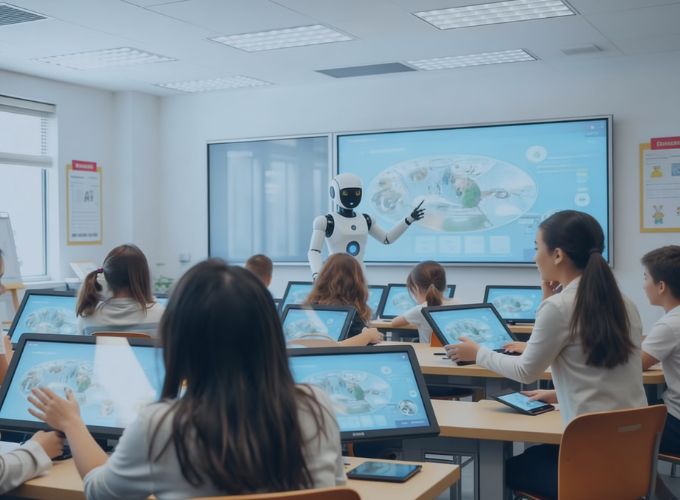
Maltese respondents emerge as the most open in the European Union to the use of artificial intelligence in education, according to a new Eurobarometer survey examining future needs in digital education. The Flash Eurobarometer survey shows that only 11% of people in Malta believe AI does not belong in the classroom, the lowest level … Continued
|
29 December 2025
Written by MeetInc.

Business Activity Holds Steady As Inflation And Uncertainty Remain Elevated
|
29 December 2025
Written by MeetInc.

Consumers Face €16.5 Million Cost As EU Emissions Charges Take Effect In 2026
|
28 December 2025
Written by MeetInc.