


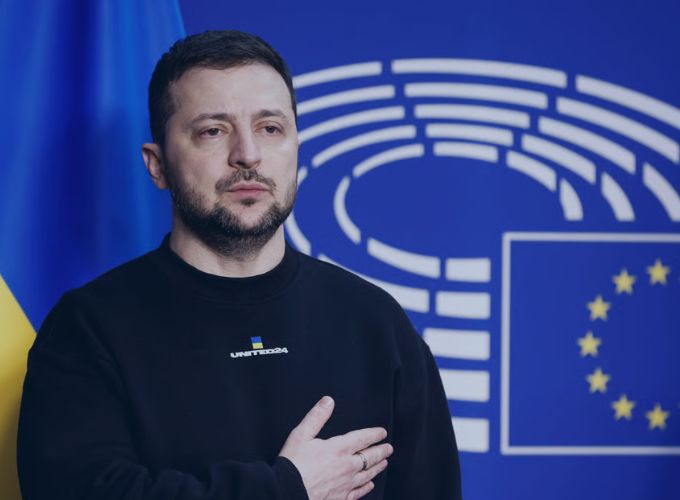
EU leaders have agreed to provide Ukraine with a €90 billion financial lifeline, after failing to reach consensus on a more controversial plan to use frozen Russian sovereign assets to support Kyiv.
Following more than 16 hours of negotiations in Brussels, European leaders approved a loan package that will be raised on capital markets and secured against unused spending capacity in the EU’s shared budget. The funding is intended to cover Ukraine’s financing needs over the next two years, as the country warns it could face economic collapse by early 2026 without additional external support.
The agreement comes after months of deadlock over whether to use approximately €210 billion in immobilised Russian state assets—most of which are held in Belgium—to back a reparations-style loan. That proposal collapsed after Belgium demanded extensive guarantees against potential legal and financial risks, a position other EU member states were unwilling to accept.
European Council President António Costa welcomed the compromise, describing it as a practical solution that ensured support for Ukraine without exposing the bloc to destabilising risks. “We committed, we delivered,” he said following the summit.
Under the agreed framework, Ukraine will only be required to repay the loan if Russia eventually pays war reparations. Until then, Russian assets will remain frozen and could still be used in the future to offset the debt, should legal and political conditions allow.
French President Emmanuel Macron described the outcome as essential, warning that failure to reach a decision would have been “a disaster.” He also urged European leaders to take a more active role in shaping any future peace talks, rather than leaving negotiations solely to external actors.
The compromise represents a political setback for German Chancellor Friedrich Merz and European Commission President Ursula von der Leyen, both of whom had pushed for a more direct use of Russian assets. However, Merz acknowledged that the final deal delivered the same practical outcome—securing funds for Ukraine—without the complexity that had stalled earlier proposals.
Not all EU member states will bear financial responsibility. The agreement explicitly exempts countries such as Hungary, Slovakia and the Czech Republic from repayment obligations, reflecting long-standing divisions within the bloc over military and financial support for Ukraine.
Despite these exemptions, EU officials stressed that the overriding priority was maintaining unity while ensuring Ukraine remains financially viable. “This was about getting Kyiv the money,” one official involved in the talks said. “Not about how.”
You Might Also Like

Latest Article
China Might Have Cracked Tech Needed For World’s Most Advanced Chips, Years Ahead Of Expectations
China appears to have achieved a major breakthrough in one of the most complex technologies underpinning modern computing: extreme ultraviolet (EUV) lithography — a capability long considered essential for producing the world’s most advanced semiconductors and AI chips. For years, Western governments, chipmakers, and analysts maintained that China was at least five to ten years … Continued
|
19 December 2025
Written by MeetInc.
EU Agrees €90 Billion Loan To Ukraine After Frozen Russian Assets Plan Collapses
|
19 December 2025
Written by MeetInc.

Mediterranean Maritime Hub Optimistic Over Investor Deal as €15m Bond Repayment Looms
|
19 December 2025
Written by MeetInc.


Berlin Launches €130 Billion ‘Germany Fund’ To Attract Private Capital
|
18 December 2025
Written by