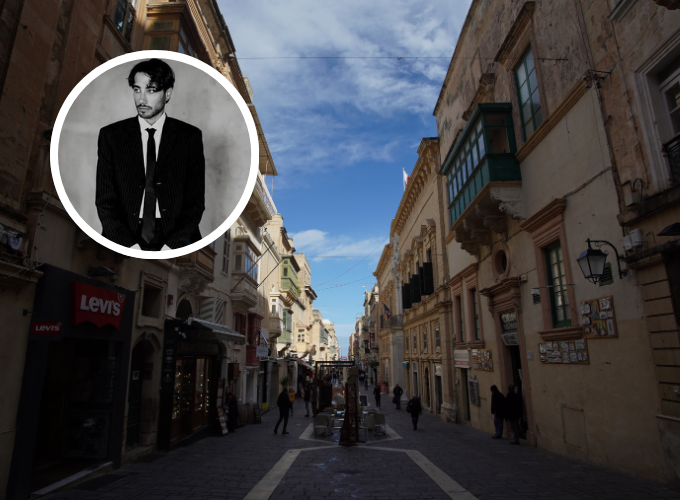


Maltese fashion designer Luke Azzopardi has publicly criticised the use of Valletta's public spaces, describing the capital as having been reduced to a disorderly sprawl of outdoor dining installations.
Azzopardi, who runs Azzopardi Studio, expressed frustration at what he sees as a widespread assumption that more is always better, arguing that the city's streets have been overwhelmed by makeshift seating, plastic coverings, artificial turf and competing noise from neighbouring establishments. He characterised the result as a sensory assault rather than a considered approach to urban hospitality.
Writing on Instagram, Azzopardi questioned why restaurants appeared to have abandoned the idea of interior dining entirely, suggesting that the scramble to occupy street space had come at the expense of architecture, visual coherence and any meaningful sense of order.
He described a scene in which tables and chairs spill into the street beneath unattractive canopies, surrounded by plastic barriers and artificial grass, with multiple audio sources competing simultaneously from establishments only metres apart. The cumulative effect, in his view, is the opposite of considered urban dining.
Azzopardi did not direct his remarks at any specific venue or authority, framing his criticism instead as a broader observation about a cultural assumption that density and visibility are ends in themselves. His intervention adds a creative industry voice to what has become a recurring debate in Malta about how the capital's historic public spaces are being used and by whom.
Valletta, as a UNESCO World Heritage Site, draws considerable scrutiny whenever the balance between commercial activity and architectural integrity is perceived to have shifted. Whether Azzopardi's remarks prompt any formal response from hospitality operators or planning authorities remains to be seen.