
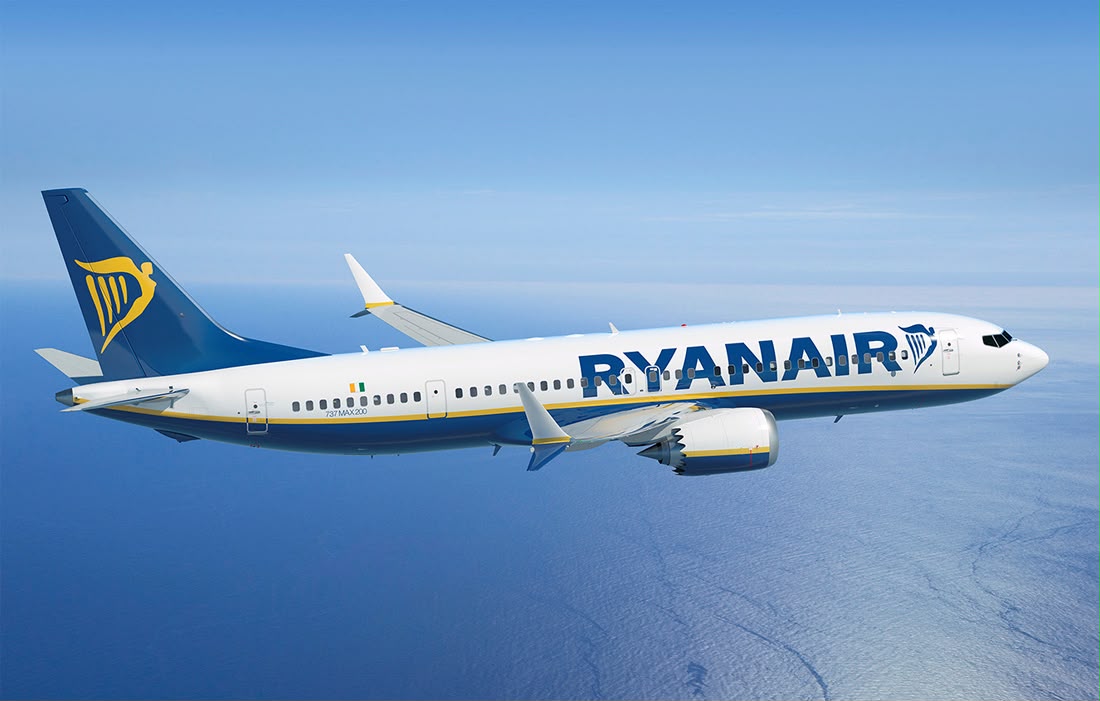


Ryanair’s first-quarter net profit fell 34 per cent on Monday, with chief executive Michael O’Leary pointing squarely at the Middle East conflict as the primary culprit behind a surge in jet-fuel costs that hammered the carrier’s earnings.
Profit after tax came in at €538 million for the three months to the end of June, down from €820 million in the same period a year earlier. Operating costs rose 11 per cent to €3.81 billion, with unhedged fuel the main driver. O’Leary said the price of Ryanair’s unhedged 20 per cent fuel portion more than doubled during the quarter, a direct consequence of the US-Iran conflict disrupting energy markets.
Ryanair hedges the bulk of its fuel exposure as a standard risk measure, but that unprotected slice proved costly. The pressure did not stop at the pump. Average fares dropped six per cent over the period, even as passenger numbers grew by the same margin. O’Leary attributed the fare weakness to consumer hesitancy triggered by the Middle East situation, concerns over EU jet-fuel shortages, broader economic uncertainty and a trend towards later bookings that squeezed pricing power.
The results are a notable setback for Europe’s largest airline by passenger numbers, though the continued traffic growth suggests demand for Ryanair’s routes has not fundamentally weakened. The carrier’s low-cost model and extensive European network have historically proved resilient through periods of external pressure and passenger volumes holding up through a difficult quarter points to that underlying durability.
Looking ahead, O’Leary was candid about the uncertainties still facing the business. Full-year profit, he said, remains highly sensitive to further escalation in the Middle East and Ukraine, the trajectory of unhedged fuel pricing, macroeconomic shocks and the persistent risk of European air traffic control strikes. With several of those variables outside the airline’s control, the near-term outlook carries meaningful uncertainty – though the strength of demand visible in this quarter’s traffic figures gives management some grounds for measured confidence.
You Might Also Like

Latest Article
Beyond AI: Strategy And Clarity Come First
Discover more exclusive interviews and business insights at www.meetinc.com.mt — discover. connect. meet. Artificial intelligence may dominate the headlines, but according to the leadership team at 9HDigital, the biggest opportunity for businesses today isn’t simply adopting AI – it’s building the right foundations first. In a recent conversation with MeetInc, Tim Buttigieg, CEO, Gerhardt Camilleri, … Continued
|
21 July 2026
Written by Kim Vucinovic Cutajar
REVOLUT LAUNCHES SAVINGS AND CREDIT IN AUSTRALIA TO CHALLENGE BIG FOUR BANKS
|
21 July 2026
Written by Yannick Pace
TRANSPORT MALTA TO ISSUE PUBLIC CONCESSION CALL FOR MANOEL ISLAND YACHT MARINA
|
21 July 2026
Written by Yannick Pace