


Dutch Chipmaker ASML Faces US Export Control Pressure
ASML, a leading Dutch chipmaker, is facing increased scrutiny over its exports to China. US officials have expressed concerns that the company may be violating export controls by shipping advanced equipment to Beijing.
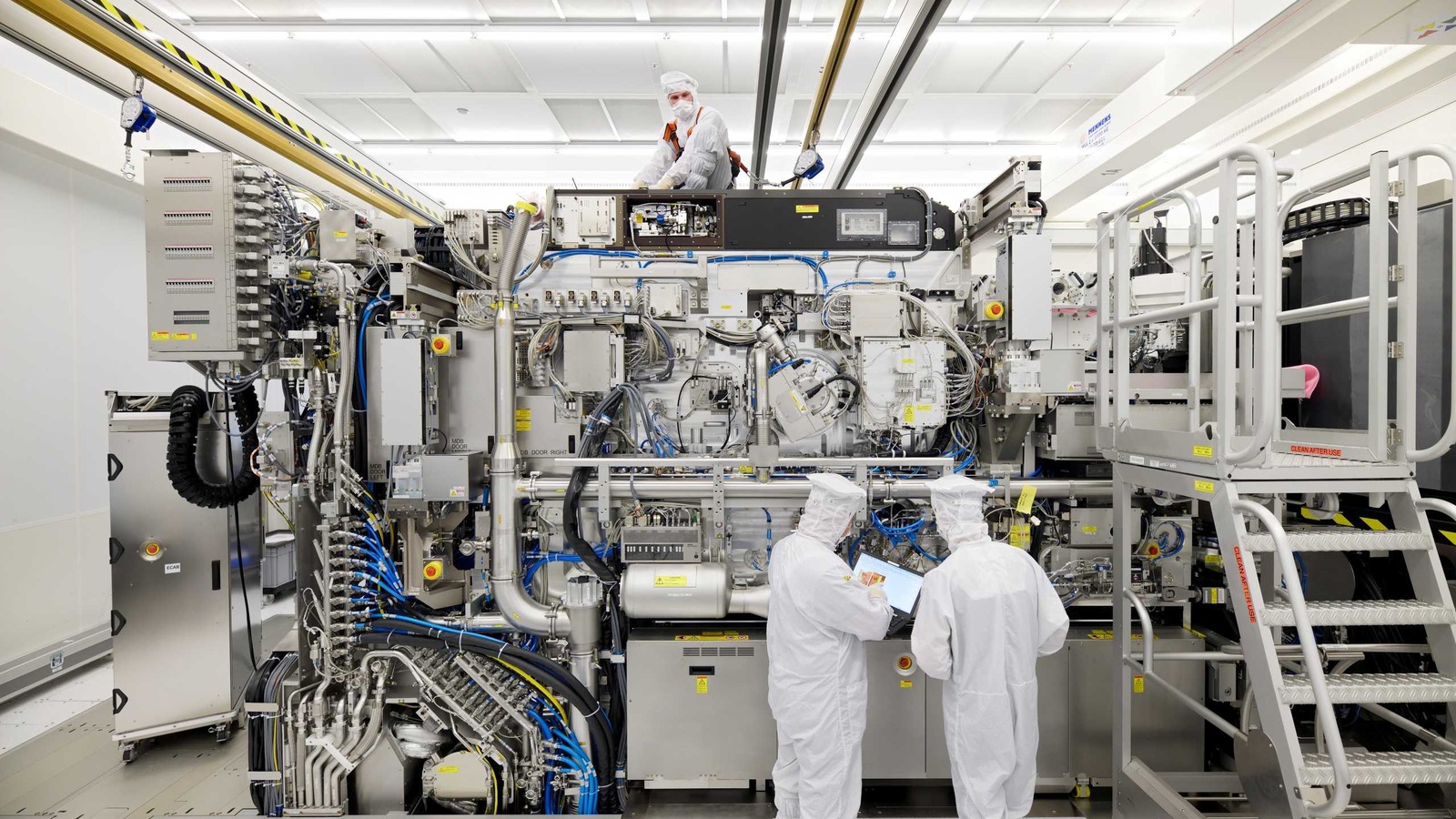
The issue has been brewing for some time, with ASML accelerating shipments of certain deep ultraviolet (DUV) tools to China before restrictions were officially in place. This move was seen as a challenge to Washington's efforts to limit Chinese access to cutting-edge chip technology.
In recent meetings, US Commerce Secretary Howard Lutnick expressed his concerns directly to ASML leaders, suggesting that one of the company's top machines may have made its way into China, violating US-led restrictions. However, ASML has consistently maintained that it has never shipped extreme ultraviolet lithography (EUV) systems to China.
The Dutch firm has also emphasized its commitment to complying with export control regulations in both the US and the Netherlands. "ASML regularly engages in transparent and open dialogue with government leaders globally," a company spokesperson said. "We recognize the national security considerations behind export control regulations and are fully committed to complying with all applicable regulations."
Despite these assurances, US officials remain concerned about ASML's business activities in China. They have pointed to evidence of the company shipping specialty equipment used to transport EUV machines, as well as other components that could be used in EUV systems.
The situation has sparked a diplomatic stalemate between Washington and Brussels, with Congress stepping in to propose legislation aimed at toughening curbs on companies like ASML. The bill would subject them to the same level of restrictions in China as US firms, effectively banning shipments of all types of immersion DUV tools from ASML.
The proposed legislation has been met with opposition from multiple foreign governments, including the Hague. However, it remains unclear what specific actions the Trump administration will take in response to these concerns.
One thing is certain: the situation highlights the complex web of export controls and regulations governing the global chip industry. As tensions between Washington and Beijing continue to escalate, companies like ASML are caught in the middle, navigating a delicate balance between compliance and competitiveness.
In this context, ASML's commitment to transparency and cooperation with government leaders takes on added significance. The company's ability to adapt to changing regulatory landscapes will be crucial in determining its future success in an increasingly complex global market.