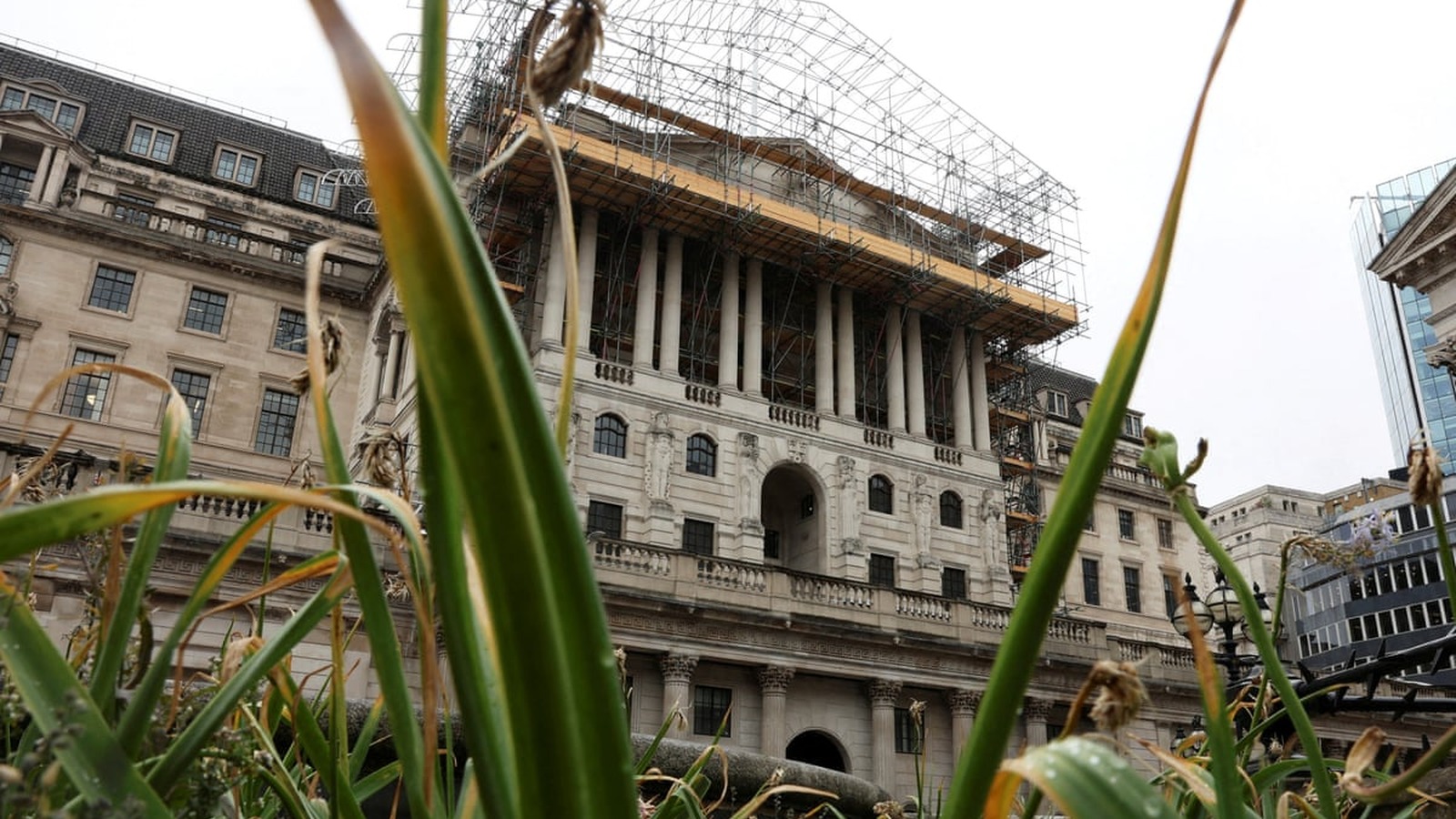



The Bank of England has held its benchmark interest rate steady at 3.75%, as policymakers seek to balance the need to address above-target inflation with lacklustre economic output. The decision was in line with expectations and was backed by seven out of nine members of the Monetary Policy Committee.
In a statement, the Bank noted that while prices have come down since the initial spike following the Iran war, the ongoing conflict makes it difficult to predict future energy price movements. As a net energy importer, the UK is particularly vulnerable to price shocks, and the Bank expects inflationary pressure to remain due to higher energy costs.
The decision comes after the Federal Reserve opted to keep US interest rates on hold, while the European Central Bank and Bank of Japan have raised their key interest rates in response to the energy crisis. Markets still anticipate a rate hike by the end of the year, with traders pricing in a 96% chance of the central bank keeping its key rate unchanged.
However, some economists believe that if energy prices continue to moderate, the debate could turn again to rate cuts, potentially next year. Others warn that the Bank cannot afford to be complacent in the face of lingering inflation risks. The decision is seen as a cautious approach by the Bank, which is playing for time rather than going on the attack against inflation.
The UK's own inflation rate held at 2.8% in May, driven by rising transportation fuel costs, while data showed the economy shrank by 0.1% in April. Despite easing in recent months, the Bank now expects inflation to tick higher again as energy prices have knock-on effects on the broader economy.
The impact of the Iran war on global energy markets remains a key concern for policymakers. The conflict has kept oil prices elevated, thanks to the effective closure of the Strait of Hormuz, a critical oil shipping route that runs through the Middle East. Washington and Tehran reached a breakthrough in peace negotiations earlier this week, but markets are still betting that the Bank of England will raise rates by the end of the year.
Central banks around the world are grappling with the challenge of inflation, with some opting for rate hikes to combat rising prices. However, the Bank of England's decision to hold interest rates steady suggests a more cautious approach, at least for now. Economists are divided on what this means for future policy, but one thing is clear: the UK's economy remains vulnerable to global uncertainty and inflation risks.