

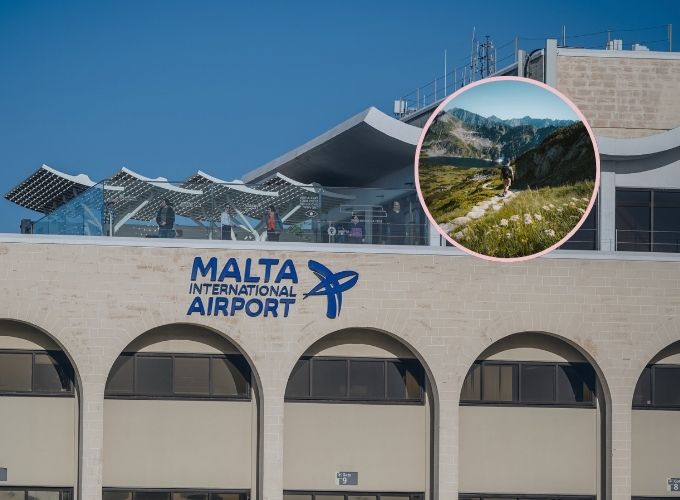


Malta International Airport continued to reshape its route development strategy in 2025, placing a growing emphasis on northern and colder European markets as part of a broader effort to reduce seasonality and support more balanced, year-round tourism.
Throughout the year, the airport was connected to 111 airports across 37 markets, served by 34 airlines. Four new carriers joined the airport’s portfolio, including LOT Polish Airlines, Qatar Airways, SAS Scandinavian Airlines and Volotea, strengthening links not only with core European destinations but also with long-haul and northern markets.
While total seat capacity increased by just over 13% year-on-year, seat occupancy levels remained broadly stable, reflecting what the airport described as controlled and sustainable network growth. This approach resulted in just over 10 million passenger movements, but the underlying focus was on how and when those passengers travelled, rather than headline volumes alone.
Low-cost carriers continued to play a central role in expanding connectivity, particularly across Northern and Eastern Europe. Ryanair, Wizz Air and easyJet increased frequencies and launched new routes aimed at markets with strong off-season potential. At the same time, Malta International Airport continued to rebalance its airline mix by strengthening its flag-carrier presence.
Three of the four airlines that launched operations in 2025 were flag carriers. Qatar Airways connected Malta to Doha, providing access to a major global hub, while LOT Polish Airlines and SAS enhanced Malta’s reach into Poland and Scandinavia respectively — regions that are increasingly important for winter and shoulder-season travel.
This strategy was reflected in market performance. The United Kingdom reclaimed its position as Malta’s largest market, accounting for 20% of total traffic and growing by 17% year-on-year. Growth was driven by targeted route development, including new services to Glasgow and London Southend, as well as Jet2 expanding its winter operations into the summer season and adding a route to Liverpool.
Poland stood out as the fastest-growing market, expanding by nearly 49% year-on-year and rising from fifth to third place among Malta’s top source markets. The growth was supported by LOT’s return with multiple weekly services to Warsaw, new Ryanair summer routes to Rzeszów, and Wizz Air expanding its Warsaw service to daily flights.
Looking ahead, Malta International Airport says its strategy for 2026 will continue to prioritise northern, eastern and Scandinavian markets to further address seasonality. Winter traffic already grew faster than summer traffic in 2025, and the airport is forecasting approximately 10.5 million passenger movements in 2026, with more moderate growth spread more evenly across the year.
Planned route development includes additional frequencies on existing services, new routes in colder European markets, and Malta’s first long-haul connection to North America operated by a US carrier, with Delta Air Lines set to launch flights to New York.
You Might Also Like

Latest Article
Malta International Airport Sees 16.5% Passenger Growth In May
Malta International Airport welcomed 1.08 million passengers in May, marking a year-on-year increase of 16.5 per cent. The airport’s summer schedule, which features flights to over 110 destinations including three new routes inaugurated during the month, contributed to this growth. Despite a double-digit rise in seat capacity, a robust seat load factor of 83.5 per … Continued
|
12 June 2026
Written by Kim Vucinovic Cutajar

HSBC Malta Foundation Backed Centre Of Excellence Reaches 3,435 Students In Two Years
|
12 June 2026
Written by Kim Vucinovic Cutajar

The Malta Chamber Of SMEs Launches The Fifth Edition Of The Malta Business Awards
|
11 June 2026
Written by Kim Vucinovic Cutajar