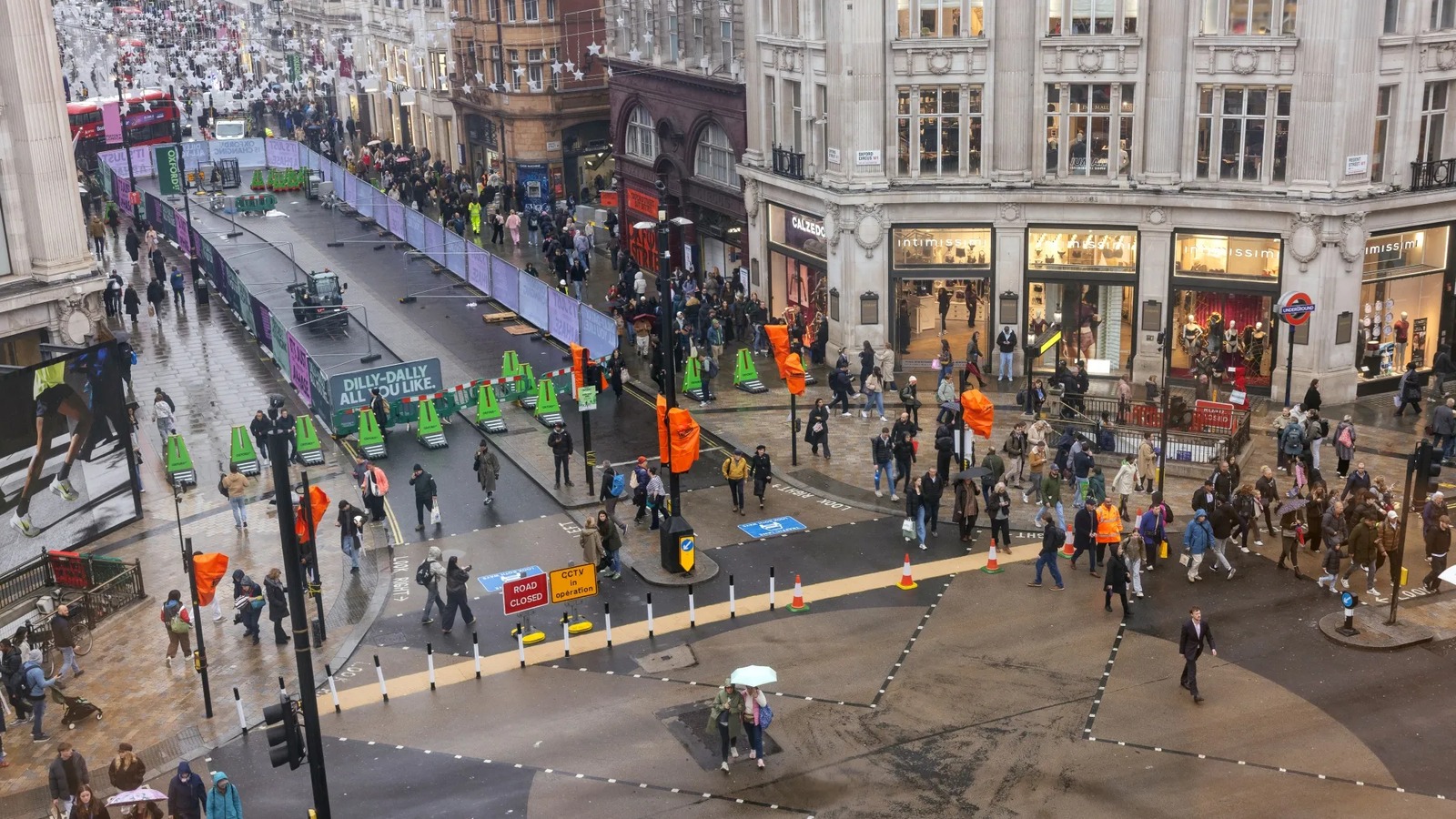


Spending at Oxford Street stores rose by 28% in the first week of pedestrianisation, climbing from about £2.9m last year to £3.7m this year. Mayor of London Sadiq Khan called the early results evidence of the “transformational impact” of removing traffic from the shopping street.
Figures from City Hall and the Oxford Street Development Corporation show more people visited the area in the first week of the scheme and spent more in shops, than in the same period a year earlier. In-store transactions were up 19% over that stretch. Khan said the initial results had come in better than expected and offered a real boost for the businesses along the street.
Almost 1km of Oxford Street, between Orchard Street and Great Portland Street, has been traffic-free since 26 October. The finished project is expected to cost £150m, a figure that covers the highway changes.
The data points to a busier street. Footfall in the traffic-free section rose by 16%, while international visitor numbers were up 42% year on year. Transport for London logged more entries and exits at Oxford Circus and Bond Street stations in the first traffic-free week and sensors outside Bond Street station recorded footfall up to 46% above the average weekday count at that location between 7th September and 16th October 2026.
Dan Hills, chief executive of Market Halls on Oxford Street, reported that trading had seen an immediate lift, with footfall up 29% and sales up 25% week on week. He said the change would take some time to settle in but he hoped it would prove positive for every retailer on the street.
Critics have questioned both the numbers and the knock-on effect on journeys through the West End. Michael Bolt, of the Marylebone Association, said the results hardly deserved the “staggering” label. He said TfL’s revised timetables allow an extra seven to nine minutes for journeys on bus route 98, increases of up to 53%, even though the public had been told most bus journey times would change by a minute or less. He also challenged the timing, pointing out that Khan published figures only from the first week, which fell over school half-term, rather than the second week when schools had reopened and weekday traffic returned.
Shoppers have raised their own concerns about accessibility, including whether the re-routed buses and the new bus stops and taxi ranks, installed about 200m and 100m from the pedestrianised area respectively, would be enough to support disabled shoppers.