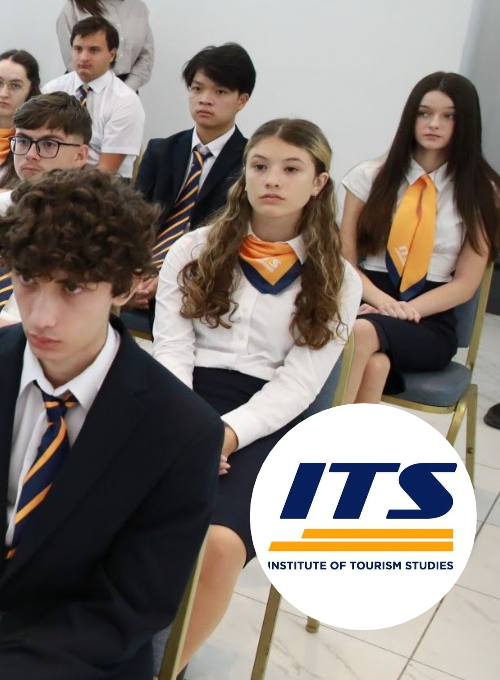


The Institute of Tourism Studies (ITS) has welcomed 300 new students for the 2026–2027 academic year, marking the beginning of a new strategic phase focused on international collaboration, industry-relevant education and the development of Malta’s tourism workforce.
The new academic year coincides with the Institute’s 40th anniversary and the implementation of its 2026–2030 strategy, From Consolidation to Mediterranean Excellence, which aims to strengthen ITS’s position as a leading institution for tourism and hospitality education in the Mediterranean.
As part of its continued international expansion, ITS has more than 60 students studying through its Zhengzhou campus in China and over 50 students enrolled through its Shanghai campus.
For the first time, students who began their studies at the Institute’s satellite campuses in China are continuing their education in Malta. ITS is also welcoming students from Austria, who will pursue their studies online through the Institute.
These developments reflect the growing importance of international academic partnerships in supporting Malta’s tourism sector and developing a workforce equipped to meet evolving industry demands.
Aligning Tourism Education With Malta Vision 2050
Addressing the start of the academic year, Minister for Tourism Jo Etienne Abela emphasised the Government’s commitment to ensuring that ITS graduates enter the workforce with the qualifications, practical experience and professional skills required to contribute to the tourism industry, both locally and internationally.
Minister Abela described the Institute’s 40th anniversary as an important milestone, reflecting four decades of investment in education and skills development that have contributed to Malta’s tourism industry.
He also highlighted the opportunity to build on this legacy through a longer-term vision aligned with Malta Vision 2050.
“Malta Vision 2050 provides us with a clear direction for a more sustainable, resilient, and competitive country, where economic growth translates into a better quality of life for our people. Tourism plays a vital role in this vision; therefore, we must move towards a model that prioritises quality, value and sustainability over mere visitor numbers,” said Minister Abela.
The Minister stressed that achieving these objectives requires continued investment in human capital, particularly as the tourism industry adapts to technological developments and changing visitor expectations.
“ITS is a key part of this vision, because investing in education and skills is a direct investment in the future of our economy. We want professionals who can adapt to change and effectively utilise technology and artificial intelligence, while simultaneously preserving the human element that gives Maltese hospitality its soul.”
Minister Abela added that the future direction of Malta’s tourism sector should be measured not only by visitor arrivals but also by the quality of experiences delivered and the long-term value generated.
“The future of tourism is not merely about the number of visitors we welcome, but about the type of experience we offer, the value we create, and the legacy we leave behind. This is precisely the thinking that links the work of ITS to the long-term vision for Malta,” he concluded.
ITS Focuses On International Collaboration And Industry-Relevant Programmes
ITS CEO Pierre Fenech outlined the Institute’s priorities for the coming years, highlighting the implementation of the new strategic framework and the development of educational opportunities aligned with industry requirements.
The strategy will focus on strengthening academic programmes, expanding international partnerships and providing students with opportunities to gain relevant skills and experience.
Fenech also emphasised the significance of students progressing from ITS’s international campuses to continue their education in Malta, describing the development as an important step in the Institute’s internationalisation efforts.
“With the start of this academic year, ITS is entering a new phase of development. We will be working to implement our 2026–2030 Strategy through industry-relevant programmes and new opportunities for students. We are welcoming Maltese and international students from various countries,” said Fenech.
“Among this year’s developments, for the first time, students who began their studies at the ITS satellite campus in China will continue them in Malta, while students from Austria will pursue their studies online with ITS Malta. These developments demonstrate how international collaboration is strengthening and creating new avenues for the ITS community,” he added.
Investing In The Future Of Malta’s Tourism Industry
The commencement of the 2026–2027 academic year represents a significant milestone for ITS as it combines its 40-year educational legacy with a new phase of strategic development.
Through the expansion of its international network, the introduction of industry-relevant educational opportunities and continued investment in professional skills, the Institute aims to strengthen its contribution to Malta’s tourism and hospitality sectors.
The new strategy also supports the broader objectives of Malta Vision 2050, particularly the transition towards a tourism model that places greater emphasis on sustainability, competitiveness, quality and long-term economic value.
As ITS enters its fifth decade, its focus remains on preparing graduates with the knowledge, adaptability and practical experience required to contribute to the future development of Malta’s tourism industry.