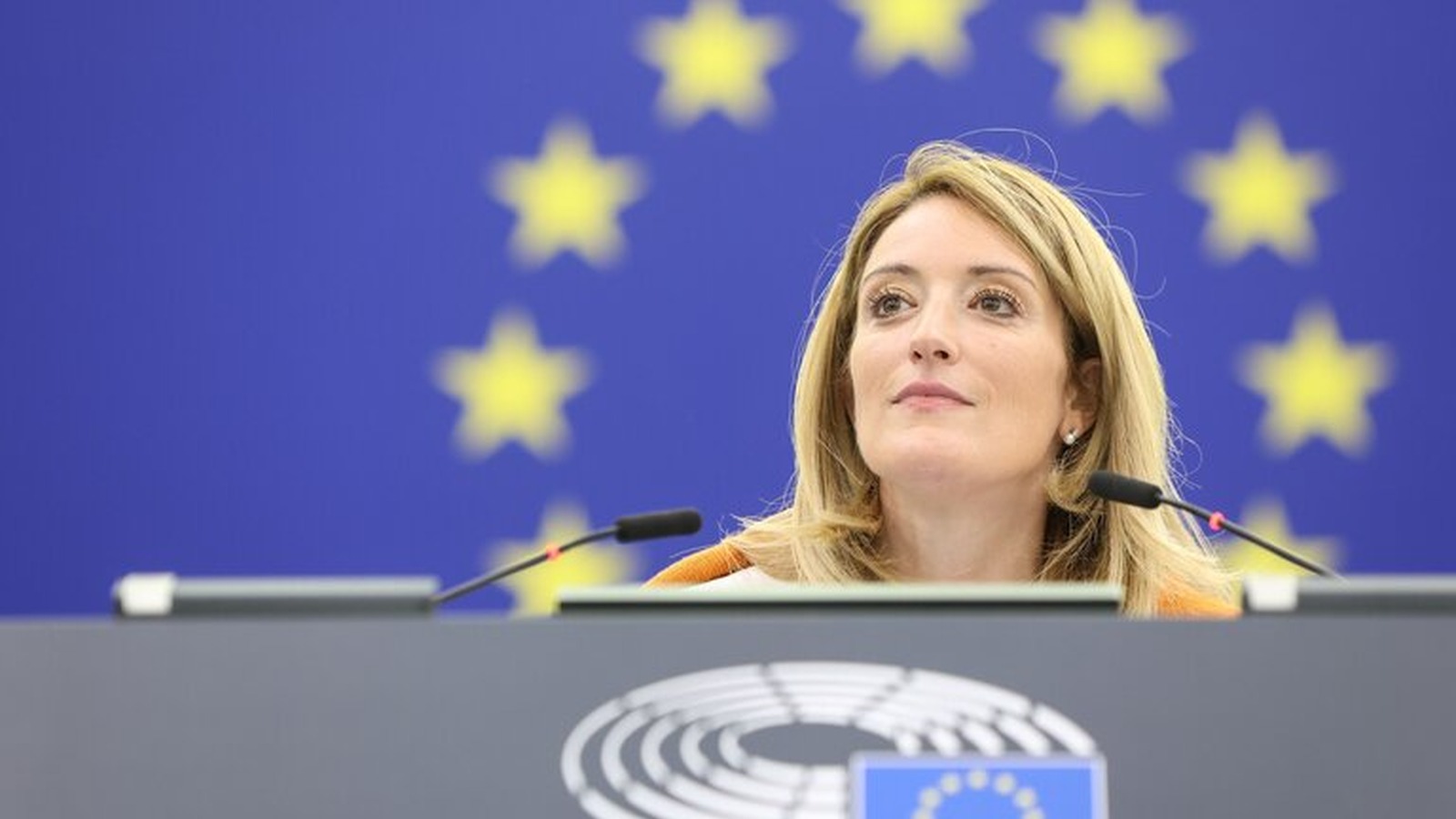


MEPs should not hand their judgment to a chatbot when writing legislation, European Parliament President Roberta Metsola told lawmakers on Wednesday, as the institution prepares fresh guidance on how its members use artificial intelligence. “Drafting an amendment with the help of AI cannot replace fundamentally the constructive debate with a colleague,” she said at an event on AI use in the Parliament. “Doing legal research with the help of AI cannot ultimately replace the judgment and the critical thinking needed to make a tough decision.”
Lawmaking, Metsola argued, demands “democratic accountability” and the public should be told whenever AI has played a part. The final responsibility, she said, stays with elected officials.
Secretary-General Alessandro Chiocchetti used the same event to confirm that the Parliament is building an internal AI tool for sensitive work, hosted on its own infrastructure. Commercial systems including ChatGPT, Claude and Meta’s Llama will still be allowed for lower-risk tasks. Testing ran through the summer and the tool could go live by September 2026.
The caution follows a jump in amendments drafted with AI, a number of them citing laws that simply do not exist. Chiocchetti pointed to one instance where a lawmaker sought legal advice from an AI tool and was handed an answer that was wrong, leaving the Parliament’s lawyers two days to prove it so.
The concern spilled into the open earlier in the year. In July, several committee chairs flagged that more MEPs and their assistants were turning to AI to produce amendments and other texts. The giveaways ranged from a spike in amendments requiring translation to telltale drafting styles and the occasional reference to invented legislation.
Chiocchetti said the administration would bring new guidelines to the Parliament’s leadership “very soon”. The staff guidance currently in force dates to 2024. As things stand, MEPs face no obligation to say whether an amendment, a parliamentary question or a speech was AI-generated, while staff must mark AI-assisted work under April 2024 rules that are now being rewritten.
He set out three principles behind the new approach: be open about using AI, keep sensitive material out of public tools, and check everything before it leaves your desk, because the name on it is yours. Imposing binding duties on MEPs themselves could mean asking the constitutional affairs committee to amend the institution’s rules of procedure.
AI could be useful for wading through the thousands of amendments the Parliament processes, Chiocchetti said, but the drafting and scrutiny of law must remain with MEPs. Any text heading to a vote, he added, should be written and reviewed by people prepared to stand behind it.
In June 2026, MEPs backed changes to the EU AI Act by 423 to 57, the first amendment since the law took effect in August 2024, delaying key compliance deadlines and outlawing AI tools used to generate nonconsensual intimate images.