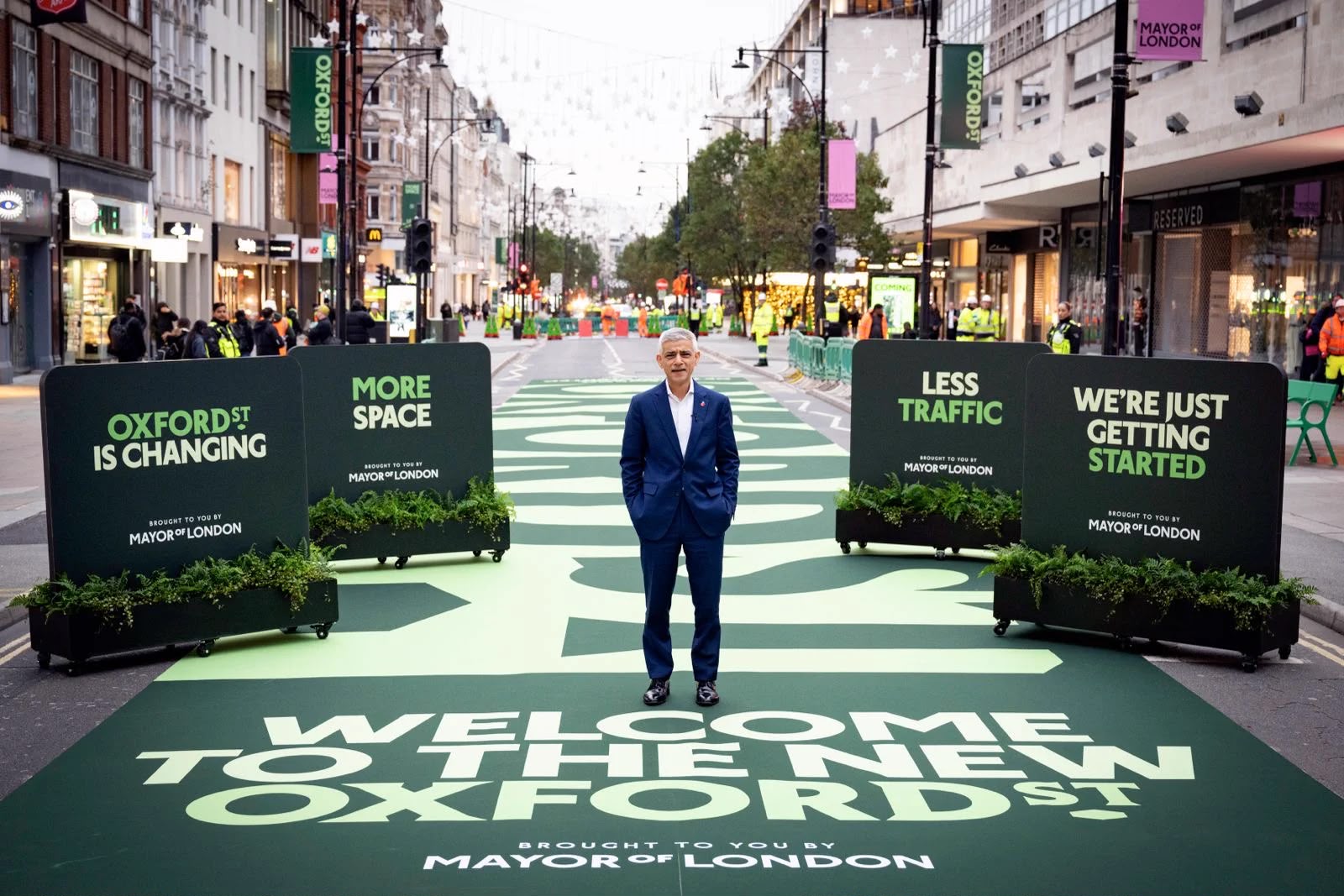


Traffic vanished from almost a kilometre of Oxford Street on Monday, as London mayor Sadiq Khan presented the move as a way to pull the capital’s most famous shopping district out of a long slide. Cars, buses, taxis and bicycles are now barred from the section running between Orchard Street, near Selfridges and Great Portland Street, just east of Oxford Circus.
The scheme arrives after decades of plans, scrapped versions and rows between the parties involved. Khan called the day a landmark for London and said clearing the road would bring back shoppers, tourists and big international names.
“For too long we’ve had years and years of decline,” said Khan, blaming online shopping, out-of-town retail parks and the Covid-19 pandemic. He argued that the slide could be undone and said it should not be treated as fixed.
The street pulls in roughly 500,000 visitors a day and around £3.1 billion in yearly spending, placing it among the busiest retail stretches anywhere. Even so, it has been dogged by empty units, departing brands and a run of American-style sweet shops, souvenir stalls and vape outlets.
Khan said he wanted the change to coax quality retailers back and draw fresh investment. “I’m looking forward to good quality shops rather than the dross we’ve had,” he said. Pedestrianisation, he said, would open space for cultural events, outdoor activity and new ways to shop, helping Oxford Street rival Times Square in New York, the Champs-Élysées in Paris and Barcelona’s La Rambla.
Transport for London’s rules shut out buses, taxis, private cars, bicycles, scooters and pedicabs from the pedestrianised part. Deliveries are permitted between midnight and 7am, emergency vehicles may enter whenever needed and mobility scooters keep their access. Bus routes have been pushed onto nearby roads, with replacement stops sitting roughly 200 metres from the car-free zone.
The work was timed for the run-up to Christmas, with building deliberately kept light to limit disruption. By spring 2027, planners expect more than 50 new trees, over 100 seats, two public squares, brighter lighting and extra space for dining.
Retailers including Selfridges and John Lewis have backed the plan, but it has drawn resistance too. Westminster City Council has cautioned that pushing traffic elsewhere could worsen congestion, pollution and noise on neighbouring streets. Council deputy leader Tim Barnes has flagged worries over access, cleaning and safety, saying the groundwork was hurried. Transport for London said it would watch the rollout to gauge its effect on businesses, residents and visitors.
Khan held firm that the overhaul was a chance to breathe life back into one of Britain’s best-known commercial addresses. “It is a truly momentous occasion for the capital,” he said.